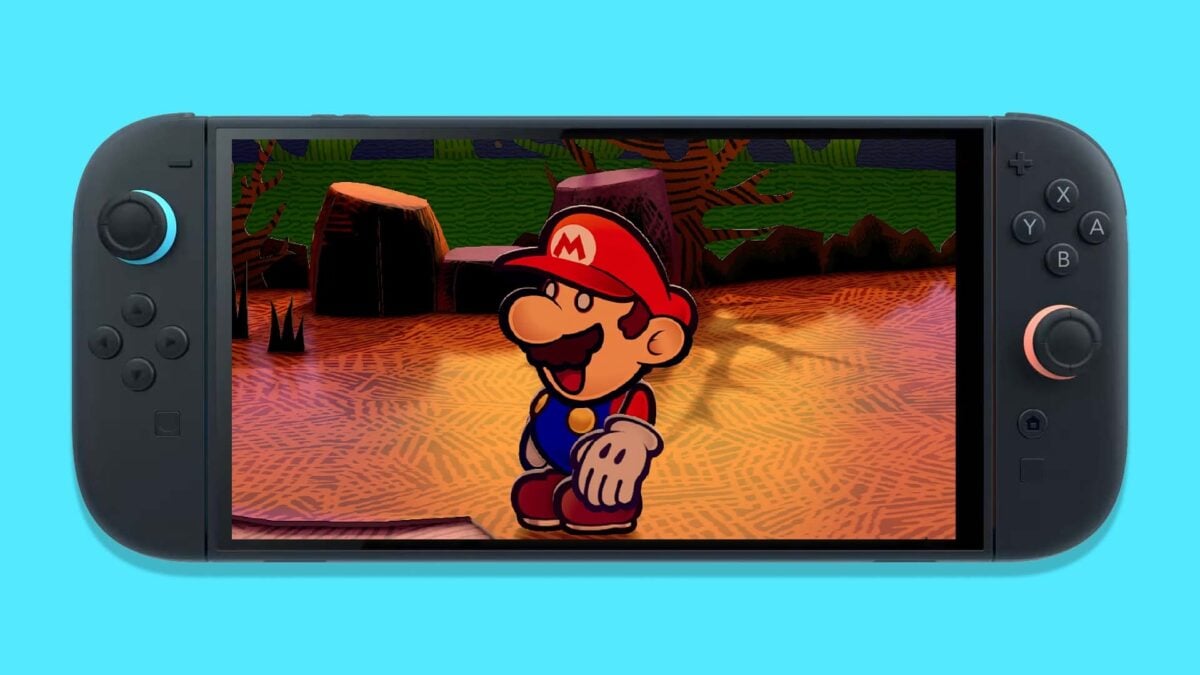
The Power Play: Nintendo Switch 2's Handheld Boost Mode - A Deep Dive into Performance vs. Portability
By The NovaPress Editorial Team
Nintendo surprised the gaming world recently with the quiet rollout of 'Handheld Boost Mode' for its new Switch 2 console. This seemingly subtle update has ignited a fervent discussion among enthusiasts and analysts alike, promising to breathe new life into an extensive library of Nintendo Switch 1 titles by allowing them to run as if the console were docked, even when held in your hands. On paper, it sounds like the dream upgrade for any fan of portable gaming: superior performance, crisp visuals, and stable frame rates for games previously constrained by the original Switch's hardware in handheld mode. However, as with most performance enhancements, there's a significant trade-off – a substantial hit to battery life. The question on everyone's mind isn't just 'Does it work?', but 'Is the sacrifice worth the spectacle?'
Unpacking the 'Boost': What Handheld Boost Mode Actually Does
At its core, Handheld Boost Mode leverages the significantly more powerful hardware of the Switch 2 to essentially bypass the original Switch's limitations in portable configuration. When the first Switch was undocked, its CPU and GPU frequencies were throttled to conserve battery and manage heat. This often led to noticeable dips in resolution, frame rate instability, and sometimes even visual compromises in demanding titles. The Switch 2, with its enhanced processing capabilities and potentially improved thermal management, can now run these older games at their 'docked' profiles, even in handheld. This means original Switch games, which might have struggled to maintain 720p at 30fps in handheld mode, could now be rendered at higher, more consistent frame rates, potentially closer to their docked 1080p targets (upscaled or natively rendered depending on the game's original design) and with greater graphical fidelity.
The immediate impact is transformative. Players are reporting games like The Legend of Zelda: Breath of the Wild, Super Mario Odyssey, and even more graphically intensive third-party titles feeling smoother, looking sharper, and generally delivering a premium experience that was previously only accessible when tethered to a TV. This isn't just an upscaling trick; it's unlocking the full potential that developers originally designed for, but which was often capped by the original hardware's portable mode.
The Battery Conundrum: A Worthwhile Sacrifice?
The elephant in the room, or rather, the rapidly draining percentage on your screen, is battery life. Running the Switch 2's hardware at higher frequencies inevitably consumes more power. Early reports suggest that Handheld Boost Mode can cut battery life by a significant margin, potentially reducing playtime by 30-50% in some scenarios. For a console celebrated for its portability and on-the-go gaming prowess, this presents a genuine dilemma.
For some, the trade-off is absolutely worth it. The ability to experience beloved games with a newfound sheen, without being confined to a docking station, fundamentally enhances the gaming experience. It's about immersion, fluidity, and seeing details that might have been lost in lower resolutions or stuttering frame rates. For others, particularly those who prioritize extended play sessions away from a power outlet, the rapid battery depletion could be a deal-breaker. It forces a choice: raw power and visual fidelity, or sustained portability. This dichotomy perfectly encapsulates the ongoing struggle in mobile tech – how to balance performance demands with battery efficiency.
Nintendo's Strategic Masterstroke: Bridging Generations
From a strategic standpoint, Handheld Boost Mode is a brilliant move by Nintendo. It serves multiple purposes:
- Enhancing Backwards Compatibility: It makes the Switch 2 not just compatible with previous generation games, but actively enhances them, offering a compelling reason for Switch 1 owners to upgrade and for new players to dive into Nintendo's rich back catalogue.
- Showcasing Switch 2 Power: Without needing a brand-new, graphically intensive title to prove its mettle, the Boost Mode immediately demonstrates the Switch 2's horsepower by improving existing games.
- Value Proposition: It adds significant value to the Switch 2 beyond just new games, offering a 'remastering' effect for hundreds of titles that players may already own.
- Managing Expectations: It allows Nintendo to roll out significant improvements incrementally, building excitement and demonstrating capability without the immediate pressure of an entirely new generation of software.
Future Implications and the Road Ahead
The introduction of Handheld Boost Mode sets an interesting precedent. It suggests a future where console generations blend more seamlessly, with newer hardware not just running older games, but actively making them better. For developers, this could mean less pressure to completely re-release or remaster titles, as the base hardware itself provides a significant uplift. For consumers, it reinforces the value of their digital libraries across hardware iterations.
However, it also puts increased pressure on battery technology. As consoles become more powerful, the demand for sustained, high-performance portable power sources will only grow. It wouldn't be surprising to see future iterations of portable consoles, perhaps even a mid-generation refresh, focus heavily on battery innovations or offer larger, heavier devices that prioritize longevity alongside performance.
Conclusion: A Glimpse into Nintendo's Ambitious Future
Handheld Boost Mode for the Nintendo Switch 2 is more than just a feature; it's a statement. It's a bold affirmation that Nintendo is committed to pushing the boundaries of what portable gaming can be, even if it means confronting the perennial challenge of battery life head-on. While the trade-off is undeniable, the ability to revitalize an entire generation of games with a flick of a setting is a powerful incentive for many. It's a double-edged sword, perhaps, but one that undeniably cuts a path towards a more vibrant and visually engaging portable gaming future, solidifying the Switch 2's position as a truly next-generation hybrid console.