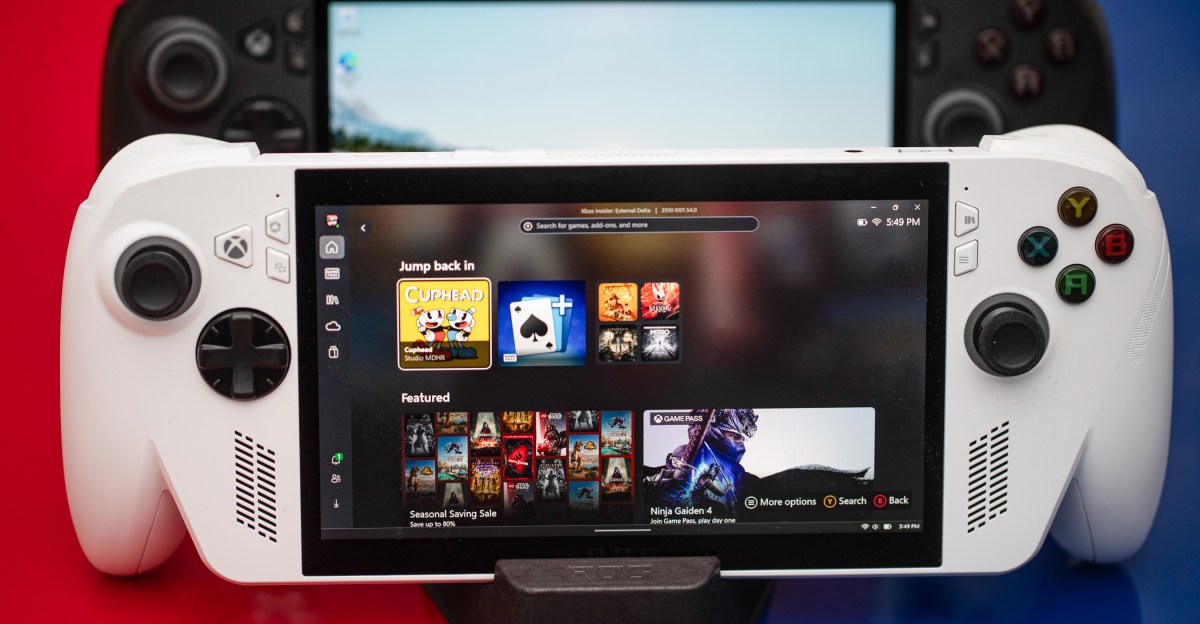
The Awakening of Trust: How the Xbox Ally X Finally Solves Handheld PC's Sleep Nightmare
By Sean Hollister (Original Research via The Verge) & NovaPress Editorial Staff
The Achilles' Heel of Handheld PCs: The Sleep Conundrum
For years, the dream of a truly portable, powerful PC gaming handheld has been tantalizingly close, yet often marred by a single, pervasive frustration: the elusive 'sleep' function. Unlike dedicated consoles or mobile phones that seamlessly transition to and from standby, PC-based handhelds have historically struggled, often waking up to drained batteries, lost progress, or even thermal runaway. This fundamental flaw has been a significant barrier to user trust, making spontaneous gaming sessions a gamble rather than a convenience.
Enter the Microsoft and Asus Xbox Ally. While a formidable contender in the handheld space, its original iteration was not immune to these 'sleep' woes. Users frequently reported issues, ranging from the device failing to enter a deep sleep, leading to battery drain, to outright crashing when attempting to resume gameplay. This constant state of vigilance, the nagging doubt that your device might betray you mid-suspend, fundamentally undermined the 'pick up and play' ethos so crucial for handheld devices.
The Ally X Difference: A Revolution in Rest
The announcement and subsequent release of the Xbox Ally X has sent ripples of cautious optimism through the gaming community, and for good reason. Early analyses and user experiences, notably highlighted by Sean Hollister at The Verge, suggest that Microsoft and Asus have finally cracked the code on the most critical, yet often overlooked, feature: sleep. The Ally X is not merely an iterative upgrade; it appears to be a foundational refinement, particularly in its power management architecture.
While specific technical details of the improvements are still being thoroughly dissected, the consensus points to a significant overhaul in how the Ally X handles low-power states. This isn't just a software patch; it's likely a combination of optimized firmware, potentially refined hardware components related to power delivery, and a more robust integration with Windows' Modern Standby capabilities. The goal is clear: to mimic the instant-on, instant-off reliability users expect from a dedicated gaming console, freeing them from the anxiety of losing a save or returning to a dead device.
Rebuilding Trust: The User Experience Transformed
The implications of a genuinely reliable sleep function are profound for the user experience. Imagine: you're deep into a session, a sudden interruption demands your attention, and you simply tap the power button, knowing with absolute certainty that your game will resume precisely where you left off, battery intact, without a glitch. This seamlessness transforms the device from a high-maintenance gadget into a true companion.
For the Xbox Ally X, this newfound reliability in 'sleep' mode is a strategic differentiator. It elevates the device from being just a powerful mini-PC to a truly versatile and user-friendly handheld gaming system. It speaks directly to the core frustrations that have plagued the sector and demonstrates a commitment from Microsoft and Asus to address fundamental usability issues rather than just chasing raw performance metrics.
Broader Implications for the Handheld PC Market
The success of the Ally X in 'sleep training' has broader implications for the entire handheld PC market. It sets a new benchmark for what consumers should expect from these devices. Competitors like Valve's Steam Deck and Lenovo's Legion Go, which have their own strengths and weaknesses in power management, will now face increased pressure to match this level of reliability. The market is maturing, and basic functionality, once a hurdle, is now becoming a table stakes requirement.
Furthermore, this triumph of engineering and user-centric design could signal a renewed confidence in Windows as the operating system for handheld gaming. If Microsoft can continue to optimize its OS for these specific form factors, addressing core issues like power states and driver stability, it paves the way for a more robust and diverse ecosystem of handheld PC devices.
Conclusion: A Restful Future for Portable Gaming
Sean Hollister's observation about finally 'beginning to trust' Microsoft's handheld Xbox Allys is more than just a passing remark; it's a testament to a significant leap forward. The Xbox Ally X, by ostensibly conquering the 'sleep' problem, doesn't just improve a single feature; it fundamentally redefines the relationship between the user and their portable PC gaming device. It's a shift from cautious optimism to genuine confidence, heralding a future where instant, uninterrupted gaming on the go is not just a dream, but a reliable reality. For NovaPress, this marks a pivotal moment in the evolution of handheld gaming, and we'll be watching closely as other manufacturers respond to this new standard of excellence.