The '78' Paradox: How Crimson Desert's Score Unleashed a 30% Stock Plunge for Pearl Abyss
By NovaPress Editorial Team
In the volatile world where creative merit meets market valuation, a new, stark reality has emerged for game developers and publishers. Pearl Abyss, the acclaimed South Korean developer behind titles like Black Desert Online, recently experienced a brutal market correction: a nearly 30% plunge in its stock price. The catalyst? The initial critical reception of their highly anticipated open-world action RPG, Crimson Desert, which currently sits at a Metacritic score of 78.
A Good Score, A Bad Day for Investors
A Metacritic score of 78 is, by most objective measures, a commendation. It signifies a game that is generally well-received, often lauded for its strengths despite minor flaws. For many studios, such a score would be a cause for celebration, a testament to years of arduous development. However, for Pearl Abyss and its investors, this 'good' score was apparently 'not good enough.' The market's reaction suggests a profound disconnect between what critics deem a solid title and what financial markets demand from a major, long-gestating release from a prominent publisher.
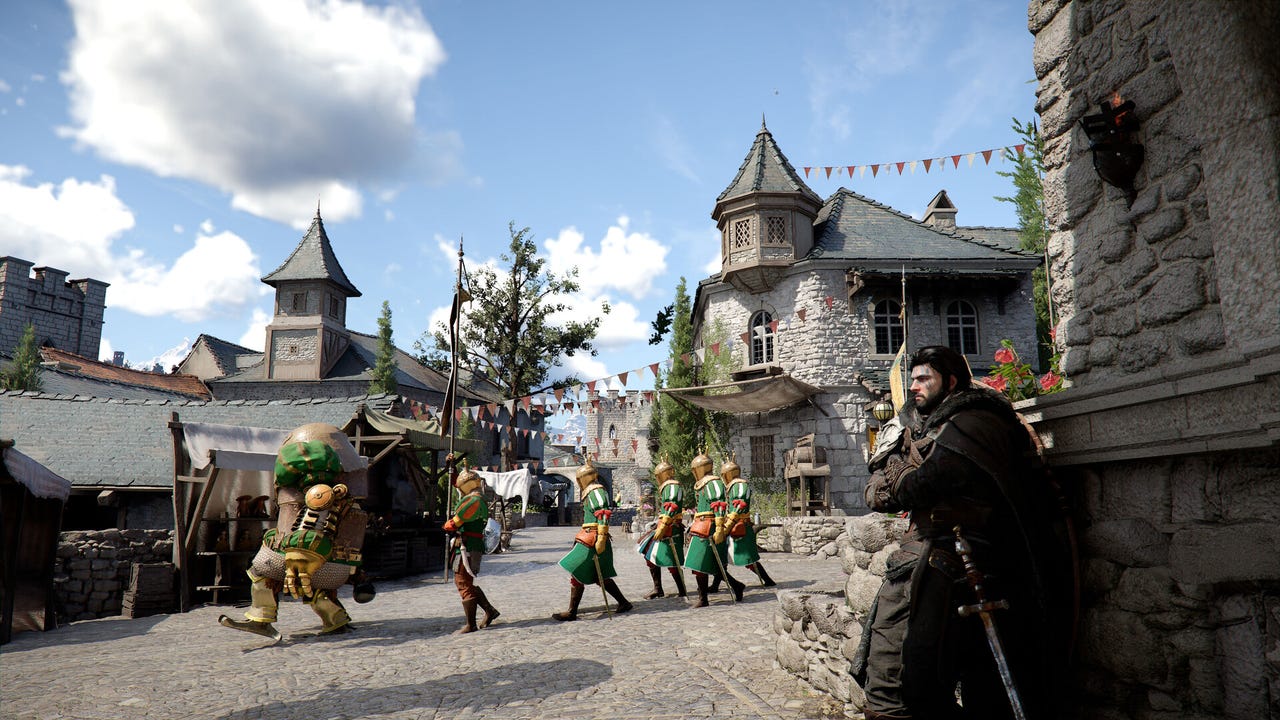
The anticipation surrounding Crimson Desert was immense. Touted as a next-generation open-world experience, it carried the weight of Pearl Abyss's reputation for visual fidelity and ambitious game design. Investors likely factored in not just the potential for critical success, but for a genre-defining, commercially colossal hit that would justify significant pre-release hype and investment. A 78, while respectable, likely fell short of these stratospheric expectations, signaling to the market that the game might not achieve the 'blockbuster' status required to significantly boost future earnings.
The Metacritic Effect: A Growing Financial Lever
This incident underscores the increasingly powerful influence of review aggregators like Metacritic on the financial health of game companies. While players often debate the validity and nuances of aggregated scores, institutional investors and analysts frequently use them as a quick, albeit blunt, instrument to gauge a game's potential commercial performance and impact on a company's stock. A high Metacritic score can signal strong sales, positive word-of-mouth, and a prolonged product lifecycle, while a middling or low score can trigger panic, leading to sell-offs.
The gaming industry, once perceived as a niche market, is now a multi-billion dollar entertainment juggernaut, attracting serious institutional investment. With this increased financial scrutiny comes a demand for predictability and quantifiable success. A score of 78, especially for an open-world RPG in a saturated market, may imply a higher risk of underperforming against its ambitious development budget and marketing spend, potentially impacting Pearl Abyss's future project funding and growth trajectory.
Beyond the Score: What Comes Next for Pearl Abyss?
The immediate aftermath for Pearl Abyss will involve damage control and a refocus on long-term strategy. While the stock plunge is a significant blow, the true measure of Crimson Desert's success will ultimately lie in its sales figures, player retention, and ongoing content updates. A game with a 78 Metacritic score can still be a commercial success if it resonates strongly with its target audience and fosters a dedicated community. However, the initial market reaction serves as a harsh reminder that 'good' no longer equates to 'financially outstanding' in the eyes of investors.
Pearl Abyss will need to demonstrate that Crimson Desert has strong legs, perhaps through post-launch content, community engagement, and transparent communication regarding its future roadmap. This event also raises crucial questions for the broader industry: are developers now under pressure to chase impossible '90+' scores to satisfy financial markets, potentially stifling innovation or leading to safer, less ambitious designs? Or does this signal a necessary evolution where market expectations align more realistically with critical reception?
The Future of Gaming Valuation
The Pearl Abyss case is a powerful cautionary tale, highlighting the delicate balance between artistic vision, critical acclaim, and investor confidence. It’s a stark reminder that in today's high-stakes gaming market, a game doesn't just need to be good; it needs to be perceived as exceptional to command the sort of financial return that satisfies Wall Street. As the industry continues to mature, the definition of 'success' will only become more complex, encompassing not just game quality, but also the intricate dance of market perception and investor psychology.