Cosmic Anomaly: The Unidentified 'Blob' That Triggered an Immediate Evacuation on the ISS
Space exploration is a realm of calculated risks, meticulous planning, and profound discovery. Yet, every so often, the vast unknown reminds us of its capacity for the utterly unexpected. Such was the case recently when an astronaut conducting a routine spacewalk outside the International Space Station (ISS) encountered a bizarre, unidentified 'blob' and was met with an immediate, urgent command: "leave the area immediately." This incident has not only sparked widespread curiosity but also raised serious questions about the nature of unknown phenomena in Earth's orbit and the safety protocols governing our presence in space.
The Unsettling Discovery in Orbit
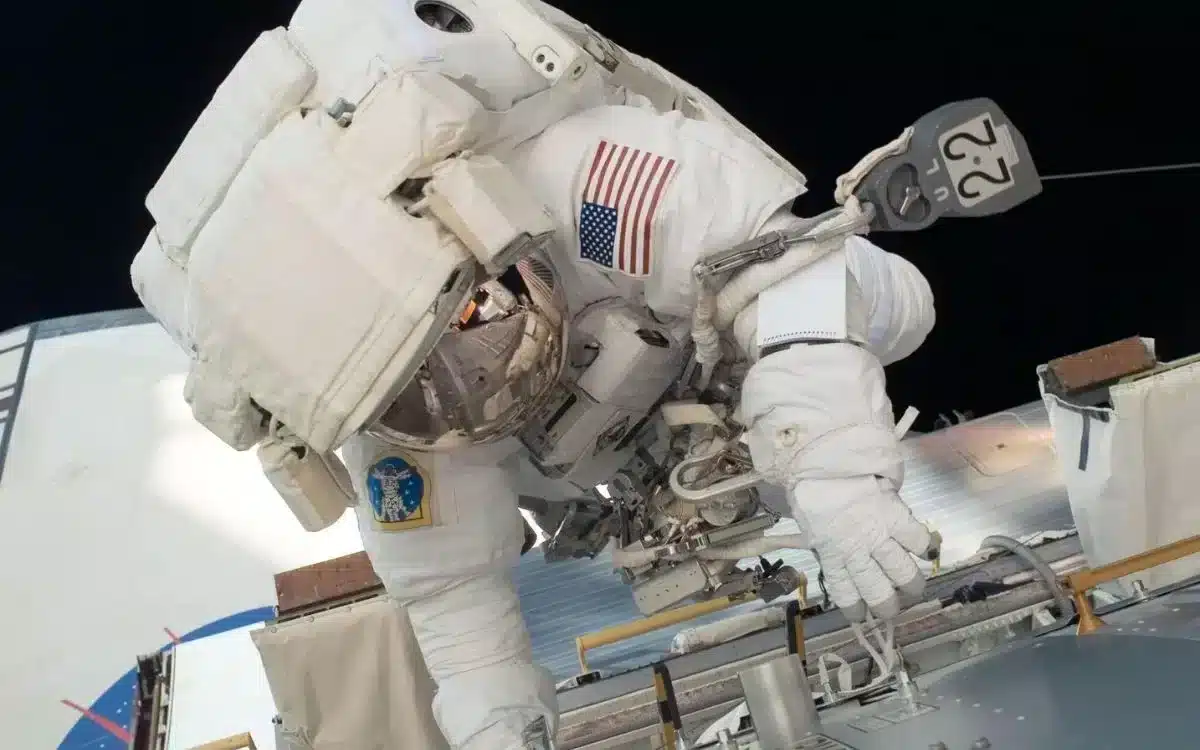
The event unfolded during a critical spacewalk, a high-stakes operation where astronauts perform vital maintenance, repairs, and scientific experiments in the vacuum of space. While navigating the complex exterior of the orbiting laboratory, an astronaut reported sighting an unusual, seemingly growing mass. Details regarding its exact size, texture, or movement remain sparse, adding to the perplexing nature of the find. The swiftness of the command to evacuate suggests an immediate perceived threat, whether from potential contamination, structural integrity issues, or an entirely unprecedented risk.
A Quarter-Century of Orbital Operations: Context is Key
The International Space Station, a marvel of international collaboration and engineering, has been continuously inhabited for over two decades. Launched almost 30 years ago, it serves as humanity's most advanced orbital laboratory, a testament to our ingenuity and drive for scientific advancement. Over its long operational history, astronauts have conducted thousands of spacewalks, encountering everything from routine debris and minor equipment malfunctions to cosmic rays and extreme temperature fluctuations. The 'blob' incident, however, stands out precisely because of the unprecedented and urgent response it elicited from ground control. This wasn't a loose bolt or a torn insulation blanket; it was something that prompted an immediate safety directive, signaling a potential unknown of significant concern.
What Could It Be? Analyzing the Possibilities
The scientific community and space enthusiasts alike are now grappling with theories about the 'blob's' identity. Several possibilities, ranging from the mundane to the truly extraordinary, are being considered:
- Cryogenic Ice Formation: It's plausible, though unusual in its reported "growing" nature, that the object could be a unique formation of ice or frozen fluids venting from the station's systems. Such phenomena have occurred before, but typically don't warrant such an immediate, alarming response.
- Biological Contamination: A more unsettling theory posits the discovery of extremophiles or other microbial life that somehow survived the harsh vacuum of space and attached to the ISS, potentially "growing" in an unforeseen way. While contamination protocols are rigorous, space is full of surprises. This would have profound implications for astrobiology and planetary protection.
- Material Degradation or Unidentified Debris: Over decades, materials exposed to the space environment can degrade in unexpected ways. A piece of insulation or other structural material could have deformed or reacted chemically to appear as a "blob." Alternatively, it could be an unusual piece of micrometeoroid or orbital debris that has adhered to the station. However, the "growing" aspect makes simple debris less likely.
- Sensor Malfunction/Optical Illusion: While less likely given a direct astronaut sighting, the possibility of equipment anomaly or a peculiar optical effect under specific lighting conditions cannot be entirely ruled out without further data.
- Truly Unidentified Phenomenon: The most intriguing and concerning possibility is that this 'blob' represents something entirely unknown to current space science—a novel physical phenomenon or even, in the realm of speculative thought, an extraterrestrial artifact or organism. While highly speculative, the urgency of the command gives pause for such considerations.
Implications for Future Space Exploration
Regardless of the 'blob's' true nature, this incident underscores several critical points for the future of space exploration. Firstly, it highlights the constant, inherent risks associated with operating in an alien environment. Even with decades of experience, space can still throw curveballs. Secondly, it emphasizes the importance of robust safety protocols and the ability for rapid, decisive action from ground control. The immediate evacuation order likely prevented potential exposure or harm, demonstrating the efficacy of current mission control systems.
More broadly, this event calls for enhanced monitoring technologies and advanced analytical tools to identify and understand anomalous objects or growths on space infrastructure. As humanity ventures further with projects like the Lunar Gateway and Mars missions, encounters with unknown elements will become increasingly probable. Understanding and mitigating such risks is paramount to ensuring the safety and success of future deep-space endeavors.
The Ongoing Mystery
For now, the 'blob' remains an enigma. What exactly was it? What prompted the immediate warning? The answers will undoubtedly fuel further scientific investigation and public discussion. This incident serves as a potent reminder that even after nearly 30 years of continuous human presence in low Earth orbit, space continues to hold secrets, pushing the boundaries of our knowledge and challenging our assumptions about the universe.