Celestial Spectacle Shakes Cleveland: Unpacking the Meteor Event Heard and Felt Across States
By The NovaPress Editorial Board
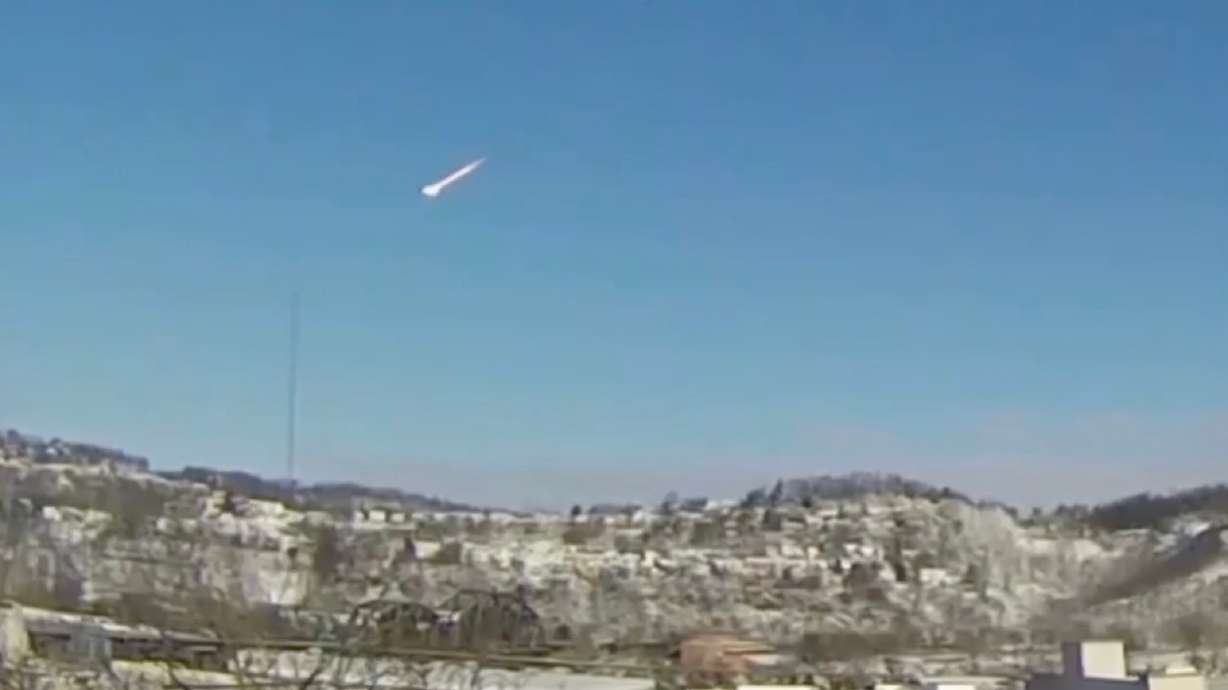
Tuesday evening, the skies above Cleveland delivered an unexpected, awe-inspiring, and slightly terrifying spectacle. A suspected meteor, blazing across the firmament, concluded its journey with an audible boom that rattled homes and nerves across Ohio and beyond. Reports poured in from residents who described the sound as an explosion, echoing a profound celestial event witnessed hundreds of miles away. This incident wasn't just a local tremor; it was a potent reminder of the dynamic cosmos that constantly interacts with our planet.
What Exactly Happened Over Cleveland?
While initially termed a "suspected meteor," the event likely involved a bolide – a large, bright meteor that explodes in the atmosphere. When space debris, even small fragments, enters Earth's atmosphere at cosmic velocities, it rapidly compresses the air in front of it, creating intense heat and light. This extreme friction often leads to fragmentation and sonic booms as the object breaks apart, generating shockwaves that can travel great distances and manifest as ground-shaking tremors and loud explosions. The energy released can be immense, comparable to small conventional explosives, explaining why residents reported such significant impacts. The trajectory and composition of the object are now key areas of potential scientific inquiry.
Widespread Impact: From Rattled Nerves to Social Media Buzz
The immediate aftermath saw social media platforms light up with bewildered and frightened accounts. "It sounded like a bomb went off right outside my window," one Cleveland resident posted on X. Others, far removed from the epicenter in states like Pennsylvania and Michigan, noted a sudden, inexplicable jolt and a deep rumble. The widespread nature of the event—being seen and heard across multiple states—underscores the sheer power and scale of these atmospheric entries. Beyond the immediate shock, such events often spark a collective sense of wonder and apprehension, prompting discussions about space, our place in the universe, and the delicate balance of Earth's protective atmosphere. Local emergency services confirmed no damage or injuries were reported, thankfully, but the psychological impact of such an unexpected celestial visitor was palpable.
Echoes of History: Cleveland's Event in Context
This isn't the first time an extraterrestrial visitor has made a dramatic entrance into Earth's atmosphere. The most famous recent example is the Chelyabinsk meteor event in Russia in 2013, which injured over a thousand people with its powerful shockwave, despite exploding miles above the ground. Further back, the 1908 Tunguska event flattened vast swaths of Siberian forest, an event still debated for its exact nature. While the Cleveland incident appears to be on a much smaller and thankfully harmless scale, it serves as a contemporary echo of these historical cosmic encounters, reminding us that Earth's skies are not always placid, and our planet is constantly interacting with debris from the vastness of space.
Future Implications: A Call for Scientific Scrutiny and Planetary Defense
Events like the Cleveland meteor provide invaluable data for planetary scientists and astronomers. By studying the trajectory, acoustic signatures captured by seismic sensors, and any potential recovered fragments (should they be found), researchers can better understand the composition of near-Earth objects (NEOs), their entry dynamics, and the effectiveness of current detection and tracking systems. This knowledge is crucial for developing robust planetary defense strategies, ensuring we are better prepared for future, potentially larger, cosmic visitors. It highlights the ongoing need for initiatives that monitor our celestial neighborhood and invest in technologies to track and, if necessary, mitigate threats from space.
The Cleveland meteor event, a fleeting but unforgettable moment, transcended a mere local disturbance. It was a potent, visceral connection to the cosmos, stirring both awe and apprehension. As the initial shock subsides, it leaves behind a deeper appreciation for the constant dance between Earth and the universe, and a renewed scientific curiosity about the enigmatic objects that occasionally grace our skies. NovaPress will continue to track any further scientific analysis or potential recovery efforts related to this celestial phenomenon.