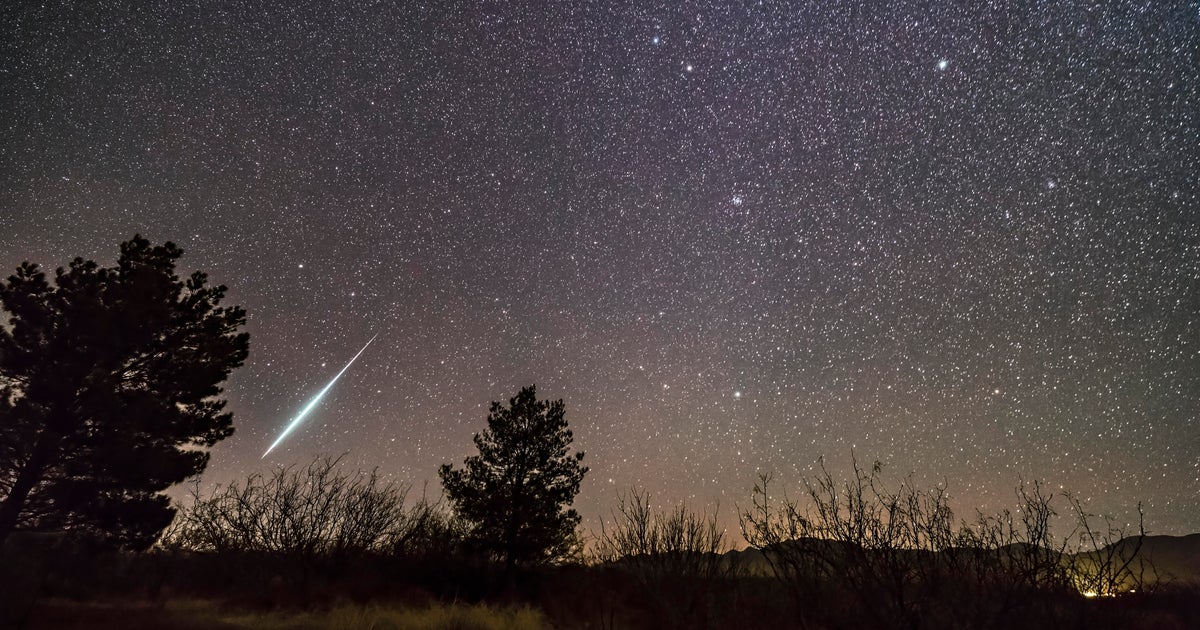
Colorado's Celestial Spectacle: Unpacking the Geminids Meteor Shower
As dusk gives way to the inky embrace of the night sky, a breathtaking celestial event is poised to captivate stargazers across Colorado. The Geminids meteor shower, lauded by NASA as "one of the best and most reliable annual meteor showers," is set to reach its dazzling peak this Saturday. With projections of up to 120 visible meteors per hour under optimal, dark conditions, this isn't just a fleeting moment; it's an invitation to connect with the cosmos on a profound level, offering a rare glimpse into the universe's dynamic artistry.
The Science Behind the Spectacle: Why the Geminids Reign Supreme
Unlike most meteor showers, which originate from cometary debris, the Geminids have a unique parent: the asteroid 3200 Phaethon. This rocky body, believed to be an extinct comet or a 'rock comet,' sheds a trail of dust and rock particles as it orbits the sun. Each December, as Earth crosses Phaethon's orbital path, these particles collide with our atmosphere at incredible speeds, vaporizing and creating the streaks of light we call meteors. This unusual origin contributes to the Geminids' consistent reliability and often slower, more colorful meteors, frequently appearing in shades of yellow, green, and blue.
The shower's radiant point, the area in the sky from which the meteors appear to originate, lies within the constellation Gemini – hence its name. While meteors can appear anywhere in the sky, tracing their paths back will lead to this specific constellation. The Geminids' peak coincides with a favorable lunar phase, often new moon or a thin crescent, minimizing natural light pollution and enhancing visibility, making this year's shower particularly promising for observers in dark-sky locations.
Colorado: A Prime Viewing Platform
Colorado's unique geography makes it an unparalleled vantage point for astronomical events. Its high altitudes offer thinner atmospheres, reducing atmospheric interference and allowing for crisper views. Furthermore, vast expanses of wilderness and designated dark-sky parks throughout the state provide sanctuaries from the pervasive glow of urban light pollution. Areas far from major cities like Denver, Colorado Springs, or Boulder – such as the San Juan Mountains, parts of the Great Sand Dunes National Park and Preserve, or remote corners of the Arapaho and Roosevelt National Forests – become natural theaters for this celestial drama.
For those planning to witness the Geminids, preparation is key. Seek out locations at least an hour's drive from city lights. Dress warmly in layers, bring blankets, and perhaps a reclining chair to comfortably gaze upwards for extended periods. Allow at least 20-30 minutes for your eyes to fully adjust to the darkness. Crucially, avoid looking at phone screens or bright lights, as this will reset your night vision.
The Lingering Threat: Preserving Our Dark Skies
While Colorado offers exceptional viewing, the encroaching spread of light pollution remains a significant concern. The artificial brightening of the night sky not only diminishes our ability to connect with the cosmos but also disrupts nocturnal ecosystems and can have implications for human health. The opportunity to witness events like the Geminids serves as a poignant reminder of what we stand to lose and underscores the critical importance of dark sky preservation efforts. Initiatives to promote responsible lighting and establish dark sky communities are vital for future generations to experience the wonders of the universe as vividly as we can today.
Beyond the Blink: The Broader Implications of Stargazing
The act of looking up at a meteor shower transcends mere observation; it's a timeless human endeavor that fosters curiosity, wonder, and a sense of our place in the vast universe. Such events inspire scientific inquiry, from amateur astronomers tracking meteor rates to professional scientists studying asteroid compositions. They also offer a shared cultural experience, bringing communities together under the same awe-inspiring canopy.
The Geminids are more than just shooting stars; they are cosmic messengers, inviting us to pause, reflect, and consider the intricate ballet of celestial mechanics playing out far above our heads. As Saturday night approaches, let us embrace the call of the cosmos, find our dark spots, and prepare to be utterly mesmerized by one of nature's most spectacular light shows.