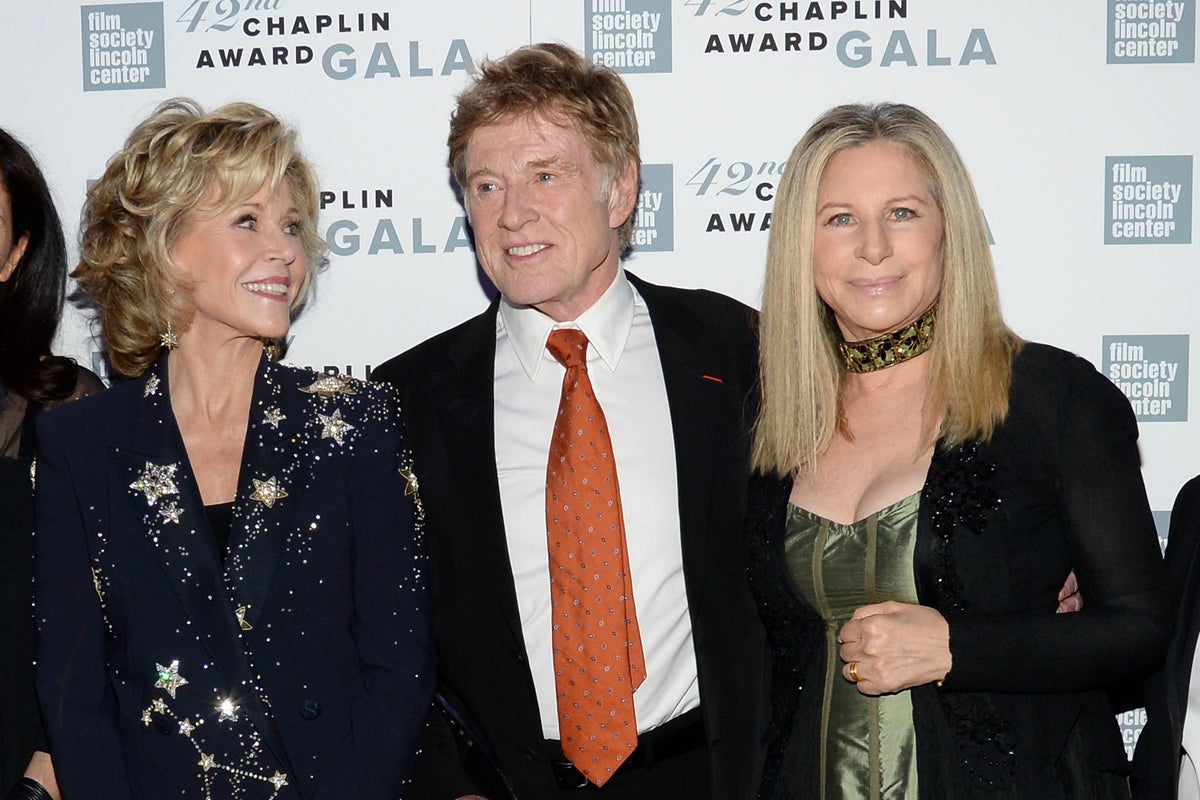
More Than Chemistry: Jane Fonda, Barbra Streisand, and the Unpacking of Robert Redford's Legacy
The Golden Age of Hollywood may be long past, but its legends continue to shape conversations, sometimes in unexpected ways. A recent comment from the indomitable Jane Fonda regarding Barbra Streisand’s tribute to Robert Redford at the Oscars has peeled back a layer on how legendary careers, on-screen partnerships, and personal perceptions intersect within the hallowed halls of Tinseltown. Fonda’s pointed observation, "She only made one movie with him, I made four," isn't just a numerical comparison; it’s a fascinating glimpse into the ownership, memory, and narrative control that define celebrity legacies.
The Iconic Collaborations: A Tale of Two Partnerships
Robert Redford, an undisputed icon of American cinema, built a career synonymous with rugged charm, intellect, and an undeniable screen presence. His collaborations often became cinematic touchstones. With Barbra Streisand, he forged perhaps one of the most enduring on-screen romances in The Way We Were (1973), a film that cemented both their statuses as romantic leads and created a cultural phenomenon. Its bittersweet narrative and powerful chemistry have resonated through generations, becoming a benchmark for cinematic love stories.
Yet, for Jane Fonda, her connection to Redford runs deeper, spanning multiple decades and diverse genres. From their sparkling romantic comedy debut in Barefoot in the Park (1967) to the contemporary drama The Electric Horseman (1979), and most recently, the poignant senior romance Our Souls at Night (2017), Fonda and Redford crafted a unique and evolving on-screen partnership. Her comment suggests a proprietary right to the narrative of Redford’s collaborative legacy, rooted in the sheer volume and varied nature of their shared work. It subtly questions whether a single, albeit iconic, collaboration should outweigh a multi-film partnership when it comes to publicly honoring a legend.
Analysis: The Stakes of Screen Chemistry and Narrative Control
This seemingly innocuous remark opens a wider analytical lens onto the competitive landscape of Hollywood relationships. On-screen chemistry is a rare and valuable commodity, often cultivated over years. For Fonda, her extensive work with Redford represents more than just roles; it signifies a professional rapport, a shared history of artistic creation, and perhaps a deeper understanding of the man and his craft. Streisand’s single collaboration, while legendary, is different in scope. Fonda’s statement implicitly asks: Does duration and frequency of collaboration hold more weight than the singular, undeniable impact of one iconic pairing?
Who controls the narrative when a legend is honored? Is it the industry through awards and tributes, the fans who cherish specific films, or the fellow artists who shared the journey? Fonda's comment highlights the often-unspoken struggle for narrative ownership. In a world where public perception can be paramount, the right to speak to, or for, a legend carries significant cultural capital. Her remark isn't necessarily a direct attack but rather an assertion of her unique position within Redford’s professional orbit, a gentle but firm reminder of her substantial contributions to his cinematic history.
Beyond the Glamour: Professional Relationships and Personal Feelings
While Hollywood often presents a united front, underlying professional relationships can be complex, involving elements of competition, camaraderie, and sometimes, perceived slights. Fonda’s statement, delivered with her characteristic candor, reveals that even at the highest echelons of celebrity, personal feelings about professional connections can surface, particularly when a public narrative deviates from a deeply held private one. It underscores that behind the glamour, there are human dynamics, friendships, rivalries, and a keen awareness of one's place in history.
Future Implications for Hollywood's Historical Narrative
This incident, while minor in the grand scheme of cinematic history, offers a valuable micro-study. It reminds us that "history" in Hollywood is often a contested space, constantly re-evaluated and re-narrated. For filmmakers and actors, it underscores the lasting impact of their collaborative endeavors and how those are remembered. For the public, it provides insight into the often-hidden layers of celebrity relationships and the human desire to assert one's contributions. As long as there are legends to honor, there will be varied voices eager to tell their version of the story, shaping and reshaping the collective memory of cinematic greatness.
Jane Fonda's comment on Barbra Streisand’s Redford tribute is more than just a celebrity quip. It's a testament to the enduring power of cinematic partnerships, the subtle politics of narrative control, and the deeply personal investment actors have in their shared on-screen legacies. It reaffirms that in the constellation of Hollywood stars, even the brightest shine in relation to one another, and sometimes, the light of one collaboration might feel brighter to one observer than to another.