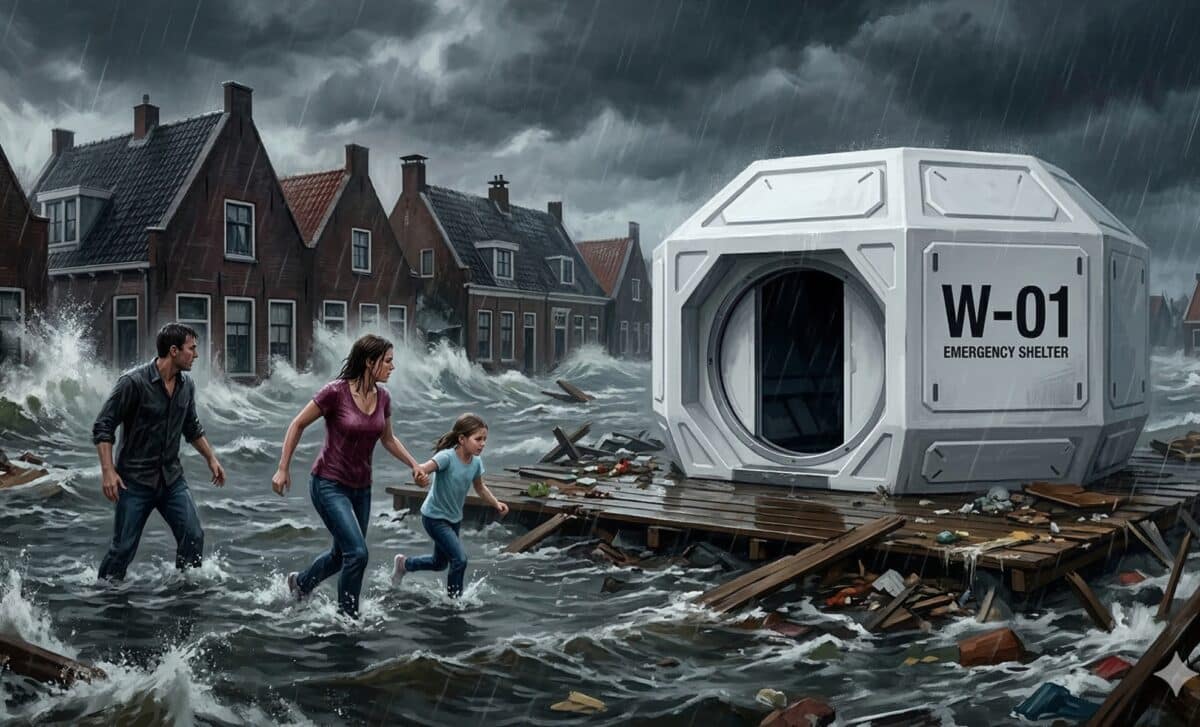
In an age increasingly defined by climatic volatility and unpredictable natural phenomena, humanity's quest for ultimate safety has taken a stark new turn. Enter the "Locks in 10 Seconds" survival capsule, a device that isn't a bunker, a shelter, or even a long-term refuge, but rather a last, desperate gamble when all other avenues of escape have vanished. Pitched as the final retreat when a towering wave is seconds away, this small, white pod represents a chilling new frontier in disaster preparedness: surrender to the inevitable, but on your own terms.
The Unsettling Premise: When Escape Is No Longer an Option
The product renders are hauntingly poignant: a pristine white pod, its hatch invitingly open, as children sprint towards it, a colossal wave menacingly building in the background. This isn't a scene of proactive evacuation or strategic withdrawal; it's a freeze-frame of absolute urgency, a testament to the grim reality that sometimes, there truly is nowhere left to run. The "Locks in 10 Seconds" capsule isn't designed for preparedness in the conventional sense, but for the precise, terrifying moment when all conventional preparedness has failed.
Engineered for Extremes: A Closer Look at the Capsule
While specific technical details remain somewhat shrouded in product marketing, the core promise is clear: rapid, airtight sealing. The capsule is described as a "sealed" entity, implying robust structural integrity capable of withstanding immense hydrostatic pressure and impact. Its "small white" aesthetic suggests a minimalist, functional design, prioritizing survival over comfort or longevity. The 10-second locking mechanism is the linchpin of its utility, designed for instantaneous deployment when every moment counts. This speaks to advanced engineering in rapid-sealing technologies, internal life support (even if temporary), and buoyancy/stability systems designed to ride out catastrophic events.
A Symptom of a Larger Crisis: Climate Change and Human Resilience
The very existence and promotion of such a device forces a critical examination of our global trajectory. Is the "Locks in 10 Seconds" capsule a pragmatic innovation in a world grappling with escalating climate change impacts – rising sea levels, more intense storms, unpredictable weather patterns? Or is it a stark symbol of humanity's growing resignation, a tangible admission that our collective efforts to mitigate environmental disaster are falling short, leaving individuals to seek solitary, last-ditch solutions? It reflects a shift from large-scale preventative measures to hyper-individualized survival strategies, raising profound questions about societal responsibility versus personal preparedness.
Ethical Crossroads: Accessibility, False Hope, and the Future of Survival
Beyond its technical prowess, the capsule introduces a complex ethical landscape. Who will have access to such technology? Will it be a luxury item, further stratifying survival chances along socioeconomic lines? Does it offer genuine hope, or merely a fleeting illusion of safety in scenarios where overall ecosystem collapse is a more profound threat? The narrative of "the last place to hide" is powerful but also deeply unsettling. It implies a world where societal structures have broken down, where communal rescue efforts are defunct, and where the individual is left to face the apocalypse in isolation.
Furthermore, what is the psychological impact of living with such a device? Does its presence normalize the extreme, fostering a sense of fatalism rather than driving concerted action towards preventing such scenarios? It begs the question: are we designing for survival in an increasingly hostile world, or are we inadvertently designing away our imperative to build a safer one?
The Road Ahead: Adapting to the Unthinkable
The "Locks in 10 Seconds" capsule stands as a powerful, albeit grim, testament to human ingenuity in the face of existential threats. It prompts us to consider the future of disaster planning, the role of personal technology in survival, and the ethical tightropes we must walk as we adapt to a changing planet. While it may offer a sliver of hope in the most dire circumstances, its true significance lies in the urgent conversation it ignites about our collective responsibility to prevent a future where such a desperate measure becomes a widespread necessity.