The Red Planet's Secret: Decoding Romoser's Claims of Insect and Reptile Life on Mars
For decades, humanity has gazed at Mars with a singular question: Is there life out there? From the 'face on Mars' to the recurring streaks once thought to be water channels, every anomaly has fueled our cosmic curiosity. Yet, a recent analysis of NASA rover images by Ohio University Professor William Romoser has propelled this question into an entirely new, and frankly astounding, dimension. Romoser claims to have identified not just microbial traces, but compelling evidence of complex, multicellular life forms strikingly similar to insects and reptiles on the Martian surface.
This assertion, detailed in a study that has sent ripples through the astrobiology community, challenges established paradigms and forces us to reconsider everything we thought we knew about the Red Planet's potential for life. NovaPress delves deep into the implications of Romoser’s findings, the scientific scrutiny they face, and what they could mean for our understanding of life beyond Earth.
An Unprecedented Claim: Life 'As We Know It' on Mars?
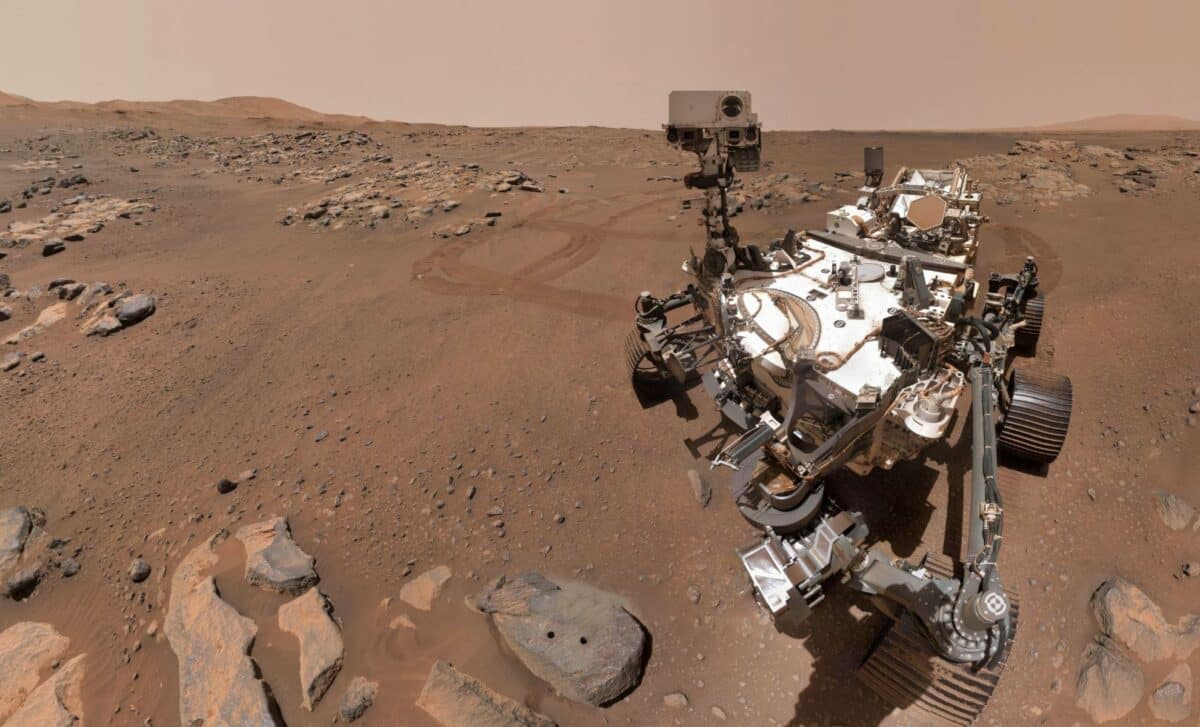
Professor Romoser's methodology is as straightforward as it is provocative: meticulous analysis of publicly available images captured by various NASA Mars rovers. Unlike previous searches for simple microbial life or biomarkers, Romoser's work focuses on morphological features – the shape, structure, and arrangement of objects – within these high-resolution photographs. He posits that numerous images contain what appear to be insect-like creatures with discernible heads, thoraxes, abdomens, and even wings and antennae, alongside reptile-like organisms exhibiting scales and segmented bodies.
His study highlights specific examples, drawing comparisons to terrestrial arthropods and reptiles, suggesting convergent evolution where similar environmental pressures might lead to analogous biological structures on different planets. This isn't merely a suggestion of life; it’s a claim of life that is visually recognizable and ecologically complex, implying an entire ecosystem sustained on a planet we largely consider barren.
The Scientific Crucible: Skepticism and the Challenge of Pareidolia
Such extraordinary claims, naturally, demand extraordinary evidence. The scientific community, while intrigued, approaches Romoser's interpretations with a healthy dose of skepticism. A primary counter-argument revolves around the phenomenon of pareidolia – the psychological tendency to perceive familiar patterns, such as faces or animals, in random or ambiguous stimuli. Martian rocks, sculpted by eons of wind and cosmic radiation, often create deceptive shapes that can easily mislead the human eye, especially when viewed through the limited perspective of rover cameras.
Furthermore, challenges of lighting, shadow, image compression artifacts, and the sheer alienness of a Martian landscape can distort perceptions. Without independent verification from multiple angles, spectral analysis, or in-situ examination, many scientists caution against drawing definitive biological conclusions from visual data alone. The burden of proof for complex extraterrestrial life remains exceptionally high, and Romoser’s visual interpretations, while compelling to some, have yet to pass the rigorous standards required for broad scientific acceptance.
Implications: Rewriting the Textbooks of Astrobiology
Despite the skepticism, the mere possibility of Romoser's findings being true carries monumental implications. If Mars harbors insect and reptile-like life, it would fundamentally alter our understanding of planetary habitability, the prevalence of life in the universe, and the concept of convergent evolution. It would suggest that life, once established, can adapt and diversify even in environments far harsher than previously thought capable of sustaining complex organisms.
Moreover, it would raise urgent questions about planetary protection and the ethical considerations of future human missions to Mars. Encounters with complex extraterrestrial life would necessitate entirely new protocols, potentially changing the very nature of space exploration from scientific discovery to interspecies interaction. The Red Planet would transform from a geological curiosity into a vibrant, living world, forever altering humanity's place in the cosmos.
The Path Forward: From Images to Evidence
The next steps are clear, though challenging. While Romoser's work provides a fascinating new lens through which to view existing data, definitive proof will require more direct evidence. Future missions, equipped with even higher-resolution cameras, advanced spectroscopic instruments, and possibly even dedicated biological sampling tools, could either confirm or refute these startling claims.
The ongoing missions of NASA's Perseverance rover, with its sophisticated suite of instruments designed to search for ancient microbial life and cache samples for Earth return, are inadvertently perfect for such a task. Every new image and every data point could potentially contribute to resolving this profound mystery. Whether Professor Romoser's observations are a remarkable instance of pareidolia or a genuine breakthrough in astrobiology, his work has undeniably reignited the debate and pushed the boundaries of our imagination regarding life beyond Earth.
The Red Planet holds its secrets closely, but with every new piece of evidence, humanity inches closer to uncovering the truth of whether we are truly alone, or if Mars has been harboring a vibrant, insect-and-reptile-filled secret all along.