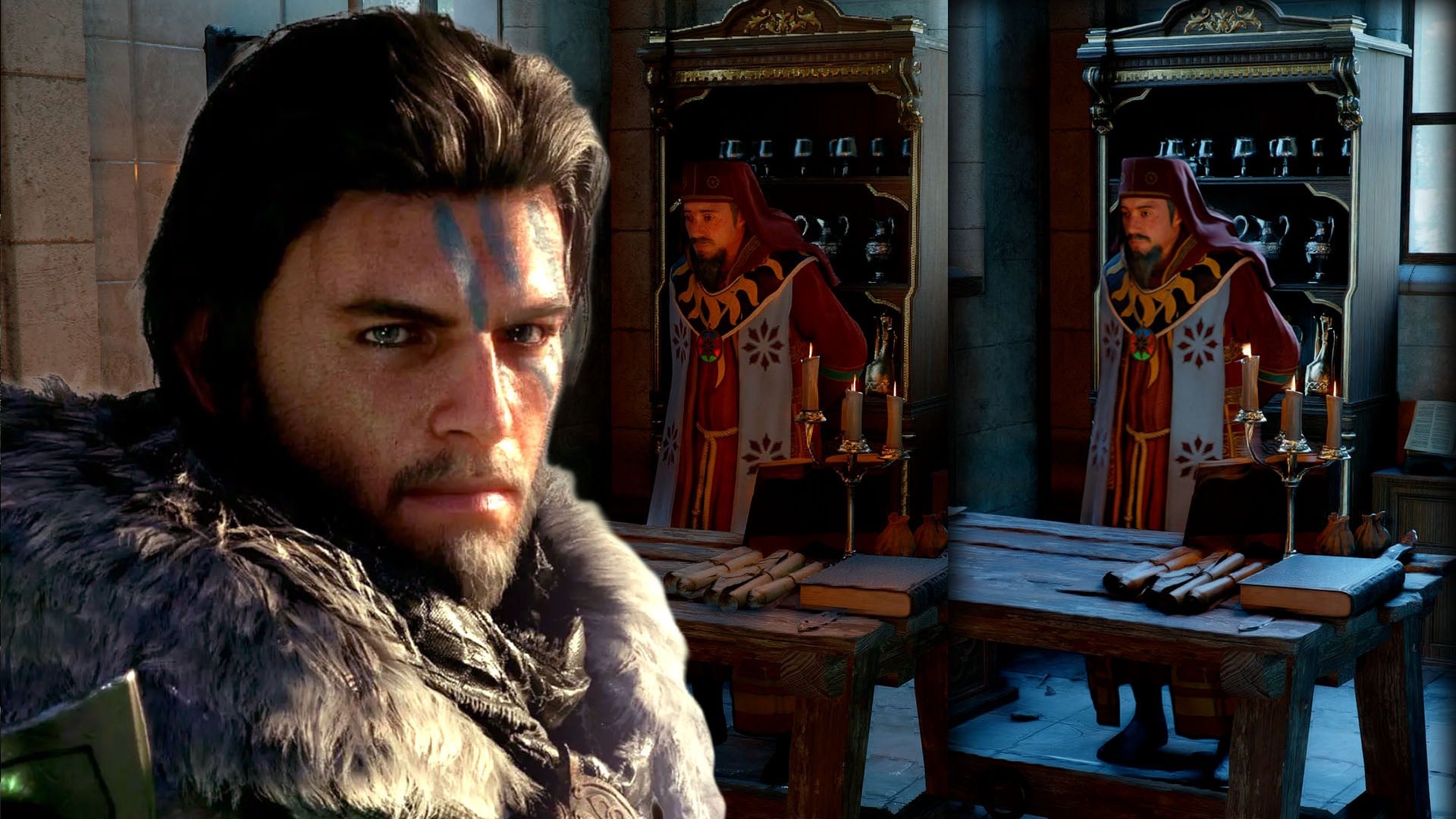
For years, the holy grail of real-time graphics has been photorealism, and few technologies promised to deliver it as effectively as Ray Tracing (RT). Yet, a new challenger has emerged from the shadows of traditional rendering, threatening to redefine our very understanding of in-game lighting: Machine Learning (ML) powered techniques. Digital Foundry, the undisputed authority on technical analysis in gaming, has cast a powerful spotlight on Crimson Desert PC, revealing that its Nvidia and AMD ML tech isn't just an improvement – it's "almost as transformative as RT on/off." This isn't merely an upgrade; it's a paradigm shift.
The Lingering Imperfections of Light
Before the advent of widespread Ray Tracing, game developers meticulously crafted lighting environments using a combination of baked lightmaps, real-time approximation techniques, and clever artistic trickery. While often beautiful, these methods struggled with dynamic lighting scenarios, realistic global illumination, and the nuanced interplay of light and shadow that defines our real world. Ray Tracing offered a computationally intensive but fundamentally more accurate way to simulate light paths, bringing unprecedented realism to reflections, shadows, and global illumination. However, its significant performance cost meant compromises were always necessary, often requiring complex denoising algorithms and hybrid rendering approaches.
ML: The New Lightbearer
The revelations from Digital Foundry regarding Crimson Desert's PC version are nothing short of astounding. By leveraging advanced Machine Learning technologies from both Nvidia and AMD, the game is achieving lighting fidelity that rivals, and in some aspects potentially surpasses, the best of traditional Ray Tracing implementations. While specific technical details are still emerging, the underlying principle involves using trained neural networks to infer and render lighting solutions more efficiently and realistically than traditional algorithms.
Efficiency Meets Realism
One of the primary advantages of ML-powered lighting is its potential for incredible efficiency. Rather than brute-forcing complex light path calculations, ML models can learn to predict optimal lighting, shadow, and global illumination patterns. This allows for highly complex and dynamic lighting scenarios to be rendered with significantly less computational overhead compared to full Ray Tracing. Imagine a vast open world like Crimson Desert's, where every time of day, every weather effect, and every dynamic object casts perfectly nuanced light and shadow without crippling performance.
Digital Foundry’s observation that the impact is "almost as transformative as RT on/off" is a powerful testament. It implies that the visual difference is not incremental, but rather a fundamental leap in how light interacts with the game world, creating an immersive depth and realism previously thought unattainable without significant hardware power.
The Future Illuminated: Broader Implications
The successful implementation of ML-driven lighting in Crimson Desert marks a pivotal moment for the entire gaming industry. Its implications stretch far beyond a single title:
- Democratization of High Fidelity: If ML can deliver RT-like visuals with less performance cost, it could make cutting-edge lighting accessible to a broader range of hardware, including the current generation of consoles and more mid-range PCs, as exemplified by the PS5 Pro's scaling.
- Empowering Developers: Game developers can spend less time optimizing traditional lighting solutions and more time on artistic vision and interactive elements, knowing that ML can handle complex light interactions.
- New Visual Horizons: This technology opens doors for dynamic weather systems, destructible environments, and physically accurate material rendering to look more realistic than ever before, adapting seamlessly to changing light conditions.
- The AI Revolution in Gaming: Lighting is just one facet. This success story paves the way for ML to be integrated into other core aspects of game development, from character AI and procedural generation to animation and physics simulations, creating truly emergent and lifelike experiences.
NovaPress's Take: A New Dawn for Gaming Graphics
The "NovaPress" team views Crimson Desert's pioneering use of Nvidia and AMD's ML lighting tech as a profound step forward. It signifies that the relentless pursuit of visual perfection in gaming is entering a thrilling new phase, one where intelligent algorithms augment and elevate traditional rendering pipelines. The era where Machine Learning isn't just a background process but a fundamental driver of graphical fidelity is here. As we look towards the next generation of games, the light has truly shifted, promising worlds more vibrant, dynamic, and breathtakingly real than ever before.