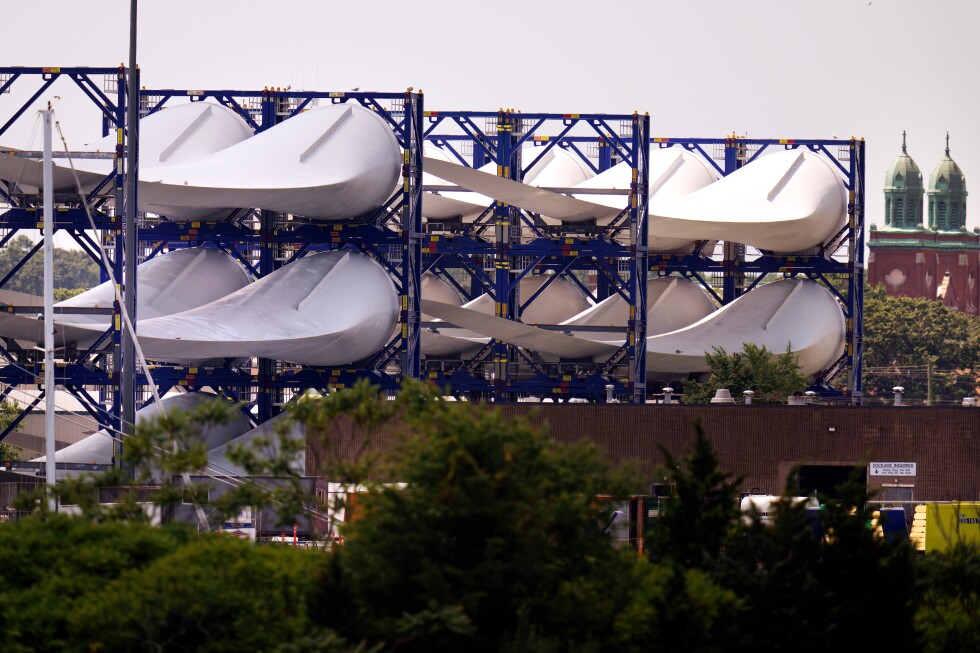
A Silent Revolution: Massachusetts Offshore Wind Farm Completes Construction, Marking a Pivotal Moment for U.S. Energy
In a significant development for the American energy landscape, a major offshore wind farm in Massachusetts has officially completed its construction. This monumental achievement, confirmed by project spokespersons, marks the first such project to reach completion during President Donald Trump's time in office. While the announcement itself is straightforward, its implications for the future of renewable energy, infrastructure development, and national policy are profound and warrant a deep dive.
The Long Road to Completion: A Decade in the Making
The completion of an offshore wind farm is not an overnight feat. These projects are characterized by extensive planning, complex regulatory hurdles, massive capital investment, and intricate engineering challenges. The Massachusetts project, though reaching its construction finale recently, represents years, if not a decade or more, of groundwork laid across various administrations and state-level initiatives. Its finish line during the Trump presidency is notable not necessarily as a direct outcome of current federal policies, but perhaps more as a testament to the enduring momentum and bipartisan necessity of diversifying America's energy portfolio.
The U.S. has lagged behind Europe in developing offshore wind capacity, despite having some of the world's best wind resources along its coasts. Early projects faced significant public opposition, permitting delays, and high costs. However, advancements in turbine technology, economies of scale, and a growing political will at the state level, particularly in the Northeast, have begun to shift this dynamic.
Navigating the Political Headwinds: A Resilient Industry
The Trump administration has often been perceived as a proponent of fossil fuels, rolling back environmental regulations and promoting oil, gas, and coal production. In this context, the completion of a major renewable energy project like an offshore wind farm stands out. It underscores a crucial reality: while federal policy can influence the pace and direction of energy development, the market forces, state mandates, and technological progress driving renewable energy are formidable.
This project's completion suggests that certain renewable energy initiatives have achieved a level of self-sustaining momentum, bolstered by state-level commitments and private investment, that allows them to progress even when federal support might be less enthusiastic. It highlights the complex interplay between federal, state, and local governments, as well as private developers, in bringing such large-scale infrastructure projects to fruition.
Economic and Environmental Dividends
The benefits of this Massachusetts offshore wind farm are multifaceted. Economically, it represents significant investment in regional infrastructure and job creation. From manufacturing and assembly to installation and ongoing maintenance, these projects generate employment opportunities across various skilled trades. They also spur local economic activity and contribute to the tax base, providing long-term benefits to coastal communities.
Environmentally, the farm will contribute to reducing carbon emissions and diversifying the region's energy mix. As a clean energy source, offshore wind helps combat climate change, reduce reliance on fossil fuels, and improve air quality. Its strategic location offshore minimizes visual impact for most residents while harnessing powerful and consistent winds to generate substantial amounts of electricity. This project moves Massachusetts, and by extension the nation, closer to ambitious renewable energy targets.
Future Implications: A Catalyst for Growth?
The successful completion of this project is more than just a single achievement; it serves as a critical proof-of-concept for the burgeoning U.S. offshore wind industry. It demonstrates that these ambitious projects are feasible, can overcome significant hurdles, and deliver on their promise. This precedent is invaluable for other proposed offshore wind farms along the Atlantic, Pacific, and even Gulf coasts.
It could accelerate the development of a domestic supply chain for offshore wind components, driving down costs and making future projects even more competitive. Moreover, it provides valuable lessons learned for permitting, construction logistics, and grid integration that can streamline future endeavors. The completion sends a strong signal to investors and developers that the U.S. offshore wind market is maturing and ready for substantial growth.
Conclusion: A Beacon for Green Energy
The Massachusetts offshore wind farm's completion is a landmark moment. It symbolizes the resilience and growing dominance of renewable energy in America's long-term energy strategy, even amidst varied political climates. As the turbines begin to spin, they will not only generate clean power but also generate confidence, paving the way for a future where America's vast offshore wind resources play a central role in powering its economy and protecting its environment. This "silent revolution" is now clearly visible on the horizon, promising a brighter, cleaner, and more energy-secure future.