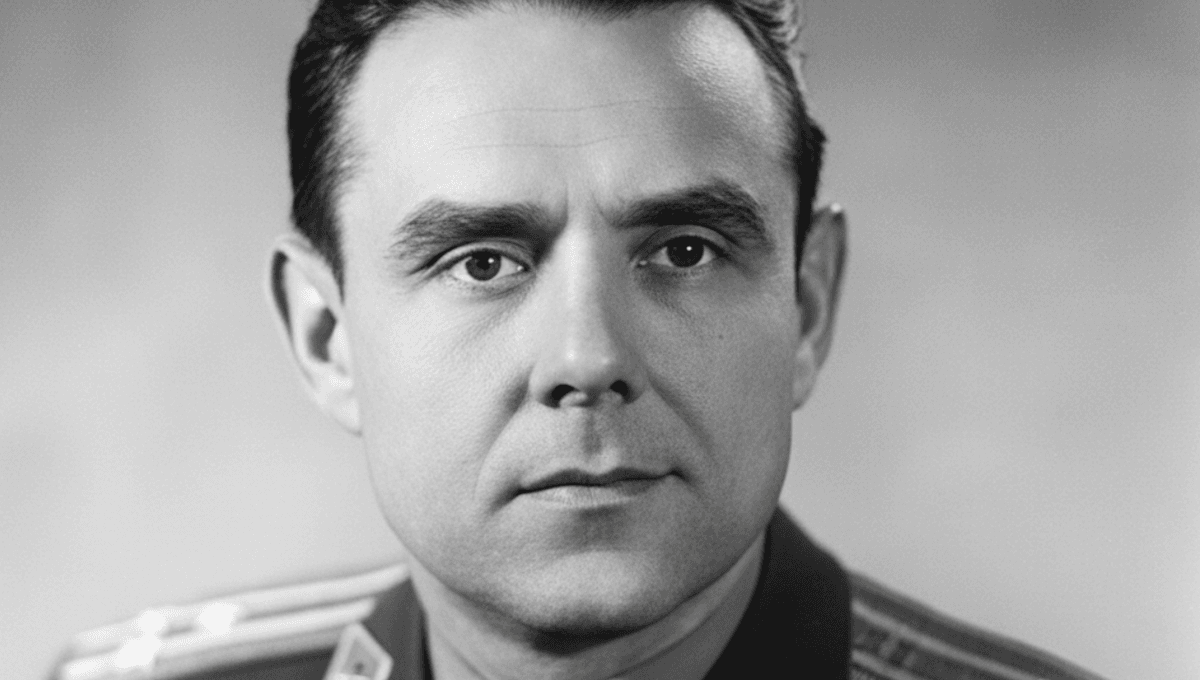
Imagine hearing your own death pronouncement, not in a hushed room, but echoing across the vast emptiness of space, relayed through a crackling radio to a world holding its breath. This was the terrifying reality for Soviet Cosmonaut Vladimir Komarov in April 1967, as his Soyuz 1 capsule, a vessel rushed into service by political ambition, spiraled towards a fiery end. His final words, a chilling testament to courage and despair, pierce through the decades, revealing a story not just of a failed mission, but of a profound human tragedy born from the Cold War’s ruthless grip on scientific progress.
The Unforgiving Arena of the Space Race
The year 1967 marked the 50th anniversary of the October Revolution, a milestone the Soviet Union was determined to celebrate with an unparalleled display of technological prowess. The Space Race against the United States was at its zenith, a bitter ideological and scientific contest where national prestige hung on every launch. Against this backdrop, the Soyuz program, an ambitious new generation of spacecraft, was under immense pressure to deliver. The plan was audacious: launch Soyuz 1 with Komarov, followed by Soyuz 2 with two additional cosmonauts, with an orbital rendezvous and crew transfer. It was a spectacular vision, but one riddled with dangerous concessions.
A Spaceship Riddled with Flaws
From its inception, the Soyuz 1 mission was plagued by design flaws and a rushed production schedule. Engineers and test pilots, including none other than Yuri Gagarin, the first man in space and Komarov's backup, reportedly identified hundreds of structural problems and technical deficiencies. Warnings were issued, internal memos highlighted critical safety concerns – particularly with the parachute system and attitude control thrusters. Yet, the political imperative to celebrate the anniversary with a grand space spectacle overruled every caution. Komarov, a seasoned and respected cosmonaut, was aware of the risks. He reportedly confided in friends that he knew the mission was doomed, a sacrificial lamb on the altar of Soviet ambition, but he wouldn't back out, fearing that Gagarin would be sent in his place.
The Fateful Orbit and Desperate Calls
Soyuz 1 launched on April 23, 1967. Almost immediately, problems began to mount. One solar panel failed to deploy, drastically cutting power. Attitude control became erratic, making navigation almost impossible. Komarov, a man of immense skill and resilience, fought tirelessly to stabilize his crippled spacecraft. Ground control worked frantically with him, attempting to guide him through increasingly complex manual maneuvers. The planned rendezvous with Soyuz 2 was aborted, and the focus shifted entirely to getting Komarov back to Earth alive. Hours of desperate efforts ensued, Komarov manually reorienting the craft using its ion sensors, a Herculean task for a craft designed for automation.
The Cosmonaut's Final Soliloquy
As the capsule began its descent, the most critical failures manifested. The primary parachute failed to deploy, ensnaring itself due to manufacturing defects. The backup parachute, designed to be deployed manually, also failed, reportedly twisting due to the extreme spin of the capsule. It was then, in those horrifying final moments, that Komarov's last words were allegedly relayed. Reports, though often debated in their exact verbatim nature, paint a picture of a man screaming in rage and despair as he plummeted towards the Earth. US intelligence reportedly intercepted conversations where Komarov was heard expressing his fury at the designers and handlers, knowing he was about to die. He spoke to Premier Alexei Kosygin, who reportedly wept, and perhaps most poignantly, he spoke to his wife, Valentina, a final, heartbreaking farewell. His cries, described as "curses and screams," mingled with the sobs of ground control, a collective witness to an unimaginable doom.
A Fiery End and a Haunting Legacy
At approximately 7:00 AM Moscow time on April 24, 1967, Soyuz 1 crashed into the steppe near Orenburg, Russia, a crumpled, molten mass. There was little left of Komarov to bury. The official Soviet explanation was a technical malfunction, downplaying the systemic issues and political pressures. Yet, the tragedy sent shockwaves through the Soviet space program. It exposed the brutal reality of the Space Race's human cost and forced a reassessment of safety protocols. Future Soyuz missions were delayed, significant design changes were implemented, and the program eventually became one of the most reliable spacecraft in history, a testament to lessons learned from Komarov's sacrifice.
Echoes of Caution in Modern Spaceflight
Vladimir Komarov's tragic fate remains a stark reminder of the ethical dilemmas inherent in high-stakes scientific and technological endeavors driven by political ambition. In an era where commercial spaceflight is burgeoning and nations are once again pushing the boundaries of human presence beyond Earth, the story of Soyuz 1 serves as a timeless cautionary tale. The balance between innovation and safety, between national pride and human life, is a tightrope walk that demands transparency, rigorous testing, and an unwavering commitment to the well-being of those who dare to venture into the unknown. Komarov’s last words, whether actual screams or merely the anguished silence of an impossible situation, forever echo as a plea for caution, a testament to the brave individuals who pioneer the cosmos, and a warning against the hubris that can lead to disaster.