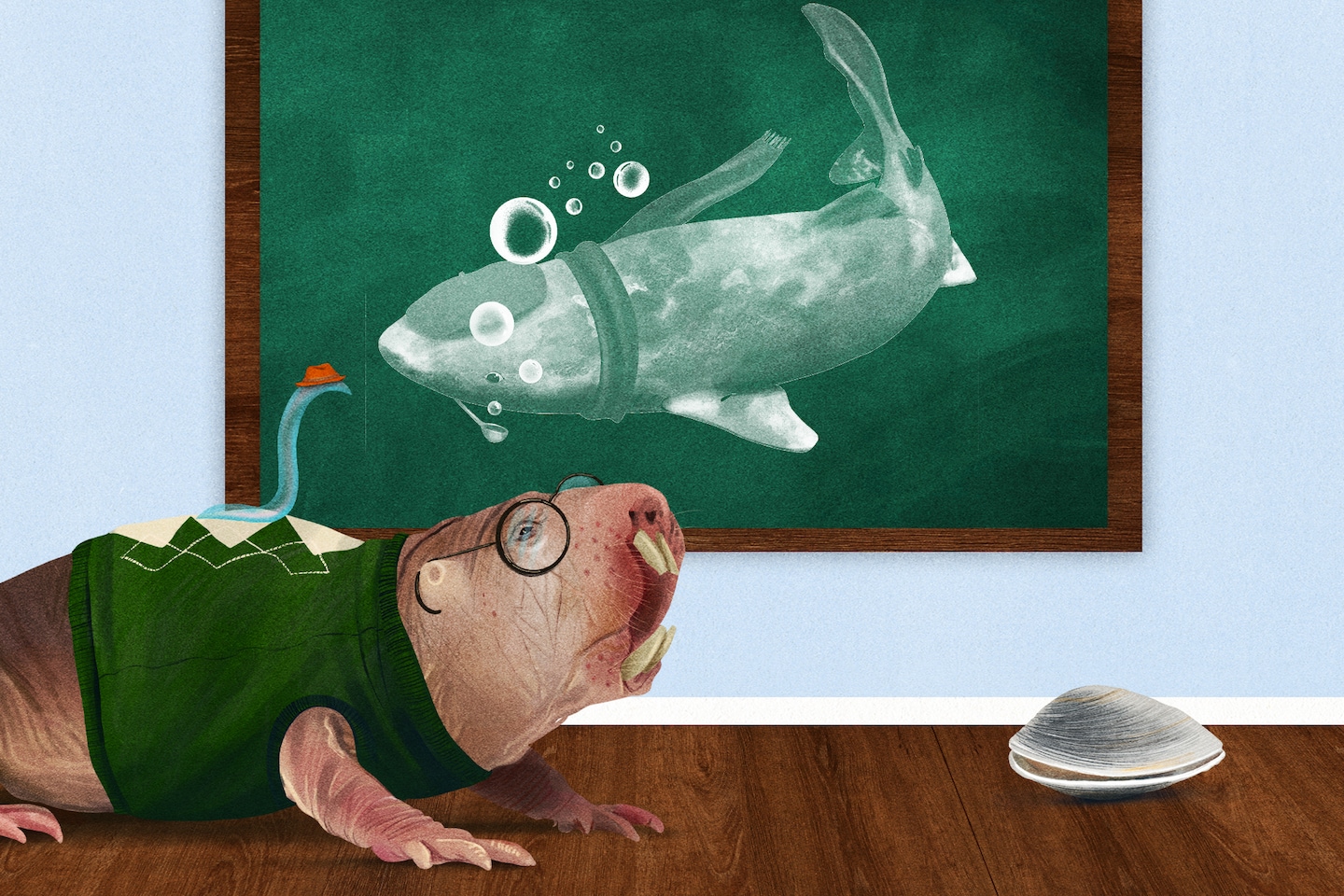
The Ageless Wonders: How Earth's Longest-Lived Animals Are Rewriting the Rules of Aging
By NovaPress Editorial Board
For millennia, humanity has dreamt of defying time, of slowing or even stopping the inevitable march of aging. While the fountain of youth remains a myth, a burgeoning field of scientific inquiry is looking not to magical springs, but to the most unexpected corners of the animal kingdom. Researchers are meticulously studying creatures with extraordinary lifespans, hoping to unearth the biological secrets that allow them to resist the ravages of time, diseases, and decay. The lessons gleaned from these biological marvels could revolutionize our understanding of aging and, ultimately, transform human health.
The Ocean's Oldest Secret: The Quahog Clam
Imagine living for over half a millennium. That's the reality for Arctica islandica, more commonly known as the ocean quahog. One specimen, dubbed "Ming" by scientists, was found to be 507 years old when collected in 2006. Born in the age of the Ming Dynasty, this humble mollusk outlived empires, revolutions, and countless human generations. Its secret? Scientists believe it's a combination of incredibly slow metabolism, living in the cold, stable environment of the deep North Atlantic, and robust cellular maintenance systems that repair damage over centuries.
The quahog's exceptional longevity provides a natural model for understanding how organisms can sustain biological functions and resist age-related decline for extended periods. Its ability to maintain tissue integrity and cellular repair mechanisms without significant senescence offers a profound counter-narrative to the typical aging process seen in most species.
The Arctic Ghost: The Greenland Shark
Swimming in the icy depths of the Arctic and North Atlantic, the Greenland shark (Somniosus microcephalus) holds the title of the longest-living vertebrate on Earth. Radiocarbon dating of eye lenses revealed that these enigmatic creatures can live for at least 272 years, with some estimates pushing their lifespan beyond 400 years. This means some individuals alive today were navigating the oceans when America was just a nascent idea.
Their extreme longevity is attributed to their incredibly slow metabolism, a direct consequence of living in near-freezing waters. They grow at a glacial pace, reaching sexual maturity only around 150 years of age. Understanding how their tissues and organs remain functional and free from significant age-related damage for centuries offers critical insights into extreme resilience and adaptive biology.
The Subterranean Maverick: The Naked Mole Rat
Perhaps one of the most unexpected heroes in the longevity quest is the naked mole rat (Heterocephalus glaber). These wrinkly, virtually hairless rodents, native to East Africa, defy almost every rule of mammalian aging. While a typical mouse lives 2-3 years, a naked mole rat can live for over 30 years, an extraordinary feat for a creature of its size. Even more remarkably, they exhibit exceptional resistance to cancer and show little to no signs of age-related diseases until very late in life.
Scientists have pinpointed several unique biological mechanisms. Their cells produce an unusually high molecular weight form of hyaluronan, a sugar molecule that acts as an anti-cancer agent. They also possess hyper-efficient protein quality control systems and unique resistance to oxidative stress. Studying their genetic makeup and cellular biology offers direct avenues for developing therapies to combat cancer and age-related neurodegeneration in humans.
Bridging the Gap: From Animal Secrets to Human Health
The scientific quest to understand these "ageless wonders" is not merely academic; it holds profound implications for human health and longevity. Researchers are actively investigating:
- Genetic Pathways: Identifying the specific genes and regulatory networks responsible for extreme longevity and disease resistance.
- Cellular Repair Mechanisms: Uncovering how these animals maintain cellular integrity, repair DNA damage, and clear senescent (zombie) cells more effectively than most species.
- Metabolic Adaptations: Studying how slow metabolism in some species contributes to extended lifespans and reduced oxidative stress.
- Unique Biomolecules: Isolating compounds like the high molecular weight hyaluronan in naked mole rats, which could lead to novel anti-cancer drugs.
The ultimate goal is to translate these biological insights into interventions that can slow human aging, prevent age-related diseases like Alzheimer's, heart disease, and cancer, and extend the period of healthy, active life – what scientists call "healthspan."
The Future of Longevity Research
While we are still far from achieving human lifespans comparable to a Greenland shark or an ocean quahog, the pace of discovery in gerontology and anti-aging research is accelerating rapidly. The detailed study of these extraordinary animals offers a blueprint for understanding the fundamental processes of aging and how they can be manipulated. Future research will likely involve advanced genomic sequencing, CRISPR gene editing to mimic longevity genes, and pharmacological interventions targeting specific pathways identified in these creatures.
The journey to a longer, healthier human life is a complex one, fraught with scientific challenges and ethical considerations. Yet, with every discovery made from the depths of the ocean to the arid plains of Africa, we move closer to unraveling the deepest mysteries of life and time. The humble mollusk, the ancient shark, and the unassuming mole rat are not just biological curiosities; they are living libraries of evolutionary wisdom, teaching us how to make human aging better, healthier, and perhaps, even a little longer.