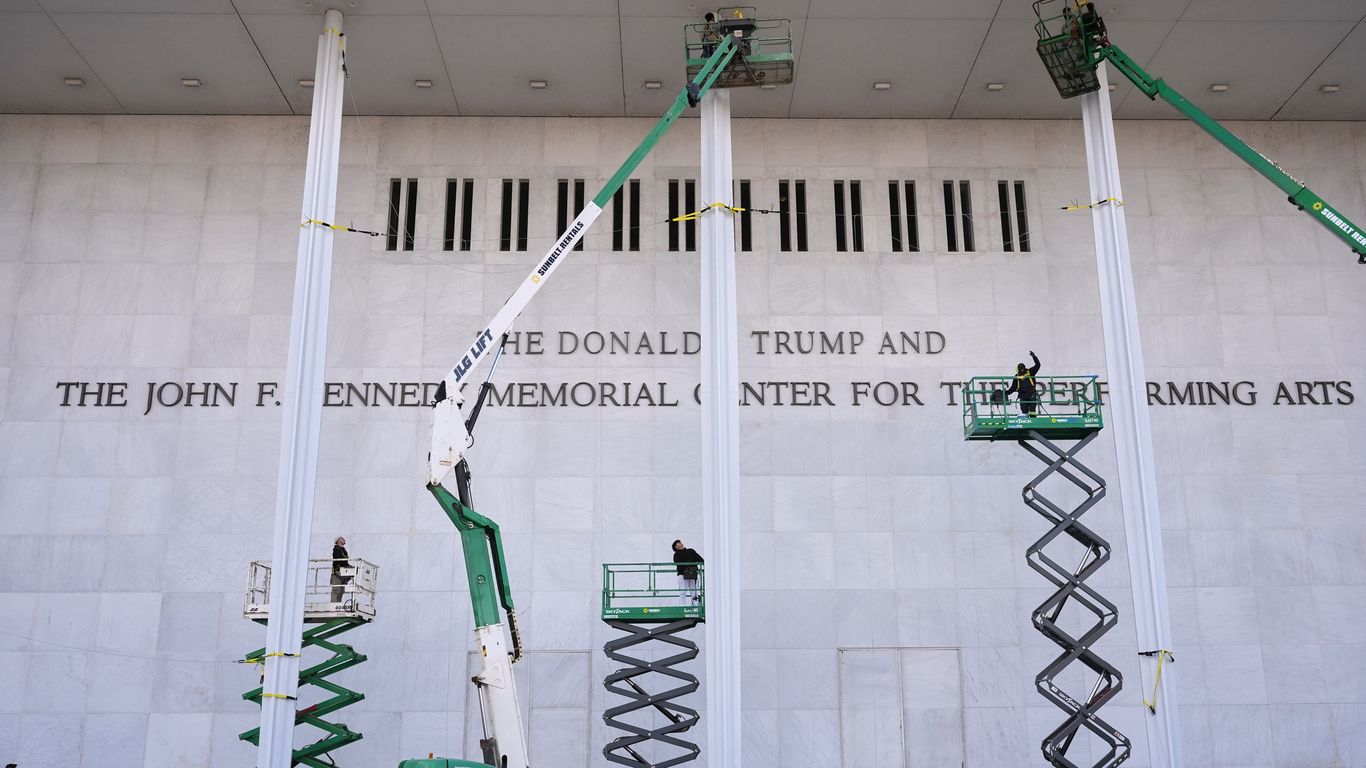
Beyond the Headlines: Ric Grenell's Kennedy Center Departure and the Enduring Questions of Influence
Washington D.C. is no stranger to power shifts and nuanced maneuvers, but the recent announcement regarding Ric Grenell's departure as chairman of the Kennedy Center for the Performing Arts has sent ripples through both political and cultural circles. While a change in leadership is common, Grenell's unique profile and the details of his transition raise compelling questions about political influence, institutional governance, and the future trajectory of one of America's most iconic cultural bastions.
The Dual Role: Diplomat and Cultural Custodian
Grenell, a prominent figure known for his diplomatic service as Acting Director of National Intelligence and U.S. Ambassador to Germany, also holds the significant designation of Trump's envoy for special missions. His appointment to the Kennedy Center chairmanship placed a distinctly political figure at the helm of an institution dedicated to the arts, a move that was met with both support and scrutiny. Critics often questioned the potential for politicization within an entity traditionally seen as non-partisan and focused on artistic merit.
His tenure was characterized by the delicate balance of managing a major cultural institution while maintaining a high-profile political identity deeply intertwined with a specific administration. This dual responsibility inevitably led to speculation about the center's direction and its role in the broader cultural landscape, particularly concerning funding, programming, and public perception.
Exit Stage Left? The Unpaid Consultant Conundrum
The news, first reported by Axios, confirms Grenell's exit as chairman. However, the plot thickens with the revelation that he "will still be active in the organization as an unpaid consultant." This particular detail is crucial. For a figure of Grenell's stature, stepping into an unpaid advisory role, especially while continuing his duties as a special envoy for a former President, suggests a continued, albeit perhaps less overt, form of engagement and influence.
The concept of an "unpaid consultant" can be interpreted in several ways. Is it a genuine desire to ensure a smooth transition and offer expertise without direct executive power? Or does it represent a strategic maneuver to maintain a degree of oversight and steerage from a less scrutinized position? Given the political climate and Grenell's established connections, the latter cannot be entirely discounted. It raises questions about the true nature of his departure and the potential for a "shadow" influence to persist within the center's decision-making processes.
Matt Floca: A New Direction or Continued Operations?
Succeeding Grenell will be Matt Floca, who currently oversees building operations. Floca's background, rooted in the operational and logistical facets of the institution, presents a stark contrast to Grenell's political and diplomatic pedigree. This shift could signal a return to a more operations-focused or administrative leadership for the Kennedy Center, emphasizing internal efficiency and the physical upkeep of its grand premises.
The appointment of someone with Floca's specific expertise might be seen as a move towards depoliticizing the chairmanship, allowing the institution to focus squarely on its core mission of presenting and promoting the performing arts. However, the presence of an influential "unpaid consultant" like Grenell, particularly one tied to a significant political movement, could complicate this perceived shift. The challenge for Floca will be to navigate these dynamics and firmly establish his own vision for the center, independent of past influences.
Future Implications for America's Cultural Beacon
The Kennedy Center, a living memorial to John F. Kennedy, is a vital component of America's cultural diplomacy and artistic expression. The leadership transition, especially under these specific circumstances, will undoubtedly have implications for its future.
- Programming and Artistic Vision: Will the center's programming lean towards new directions? Will there be an emphasis on accessibility and diversity that reflects a broad spectrum of American experience, or will the underlying currents of political influence subtly shape choices?
- Fundraising and Partnerships: Leadership changes can significantly impact donor relations and corporate sponsorships. Floca's operational focus might bring a pragmatic approach, but the departure of a high-profile political figure like Grenell could alter the dynamics of high-level fundraising.
- Public Image and Political Neutrality: The arts community often values institutions that remain above partisan fray. Floca's appointment offers an opportunity to reinforce the center's non-partisan identity, but Grenell's continued consultancy ensures that the political lens will not entirely disappear.
The announcement, which is expected to be formalized at an upcoming "Tru…" event (presumably a Trump-related gathering), further underscores the interwoven nature of politics and culture in this transition. It reinforces the notion that Grenell's connection to the center, and its leadership, remains significant, even if his title changes.
Conclusion: A Tapestry of Power and Art
Ric Grenell's move from chairman to unpaid consultant at the Kennedy Center is far more than a routine leadership change. It is a compelling case study in how political influence can permeate and evolve within cultural institutions. As Matt Floca steps into his new role, the arts world, along with political observers, will be watching closely to discern the true extent of this transition and whether it marks a genuine shift in direction or merely a reconfiguration of enduring influence at one of America's most cherished cultural landmarks. The stage is set for a new act, but the lingering presence of a key player ensures the drama continues.