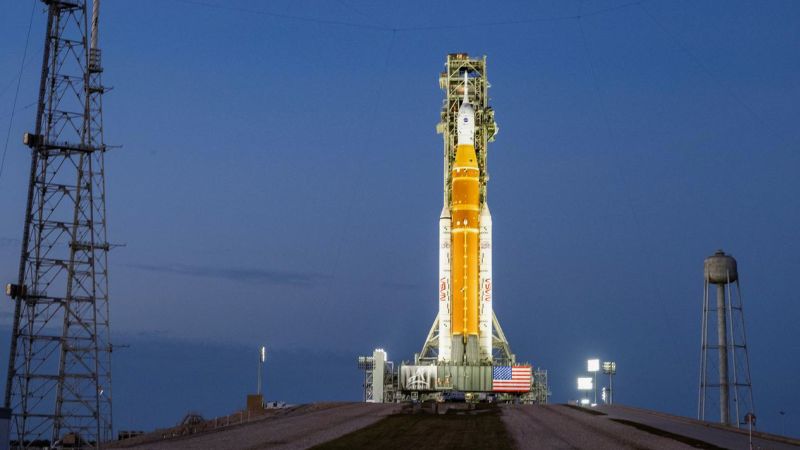
The long-anticipated return to lunar orbit for human exploration has taken a monumental leap forward. NASA's Artemis II mission, slated to carry four astronauts on an unprecedented journey around the Moon, has officially cleared a crucial risk assessment with a unanimous vote. This significant milestone, revealed during a recent news conference, not only signals immense confidence in the mission's readiness but also sets a new target launch window for early April, electrifying the global space community.
A Crucial Hurdle Cleared
The unanimous approval from the risk assessment panel is far more than a mere administrative formality; it represents a comprehensive endorsement of years of meticulous planning, rigorous testing, and painstaking engineering. Every facet of the mission, from the Space Launch System (SLS) rocket and Orion spacecraft to crew training protocols and contingency plans, has been scrutinized to the highest degree. Such unanimity underscores a robust consensus among experts regarding the mission's safety and viability, addressing concerns that have historically led to delays in complex space endeavors. This collective agreement provides a powerful impetus, reassuring both the agency and the public that all identified risks have been thoroughly mitigated or accepted within stringent safety parameters. It’s a testament to NASA's unwavering commitment to astronaut safety and mission success, laying a solid foundation for the complex operations ahead.
Artemis II: An Unprecedented Path
Artemis II is not merely a repeat of past lunar missions; it is a trailblazing endeavor designed to push the boundaries of human deep-space exploration. The mission will send four astronauts – a historic crew yet to be named in the source, but representing the vanguard of humanity's lunar return – on a complex free-return trajectory around the Moon. Unlike the Apollo missions, Artemis II aims to test critical systems of the Orion spacecraft with a human crew in a deep-space environment, further than any human has traveled before. This lunar flyby will serve as an essential dry run for Artemis III, which intends to land humans on the Moon's South Pole. The data gathered from Artemis II, covering everything from life support systems to communication protocols in cis-lunar space, will be invaluable for establishing a sustained human presence on and around the Moon, ultimately paving the way for future expeditions to Mars.
The Road to Early April
With the risk assessment complete, the focus now shifts intensely towards the early April launch window. This target date, while firming up the schedule, still leaves NASA and its partners with an arduous journey. The coming months will be packed with final integrated tests, astronaut training simulations, hardware stacking, and crucial weather monitoring. Launch windows for lunar missions are precise, dictated by orbital mechanics and planetary alignments to ensure a safe and efficient trajectory. Any unforeseen technical issues, weather delays, or minor setbacks could impact this timeline, underscoring the incredible pressure and precision required from thousands of engineers, technicians, and mission specialists. The world will be watching as NASA prepares to roll out the powerful SLS rocket and its Orion capsule to Launch Pad 39B at Kennedy Space Center, a spectacle that heralds humanity's renewed ambition in space.
Beyond Artemis II: The Lunar Gateway and Martian Horizon
The success of Artemis II is pivotal not just for this specific mission, but for the entire Artemis program and humanity's long-term space exploration goals. Artemis is a multi-faceted initiative aiming to establish a sustainable human presence on the Moon, including the construction of the Lunar Gateway – a small space station orbiting the Moon. This lunar outpost will serve as a staging point for lunar surface missions and a vital testbed for technologies needed for journeys to Mars. By returning to the Moon, NASA and its international partners are not only seeking scientific discoveries and resource utilization but also developing the operational capabilities and technological innovations required to send humans to the Red Planet. The early April target for Artemis II signals robust momentum in this grand vision, moving humanity closer to becoming an interplanetary species.
As the countdown to early April begins, the unanimous vote for Artemis II stands as a beacon of progress and collective determination. It's a testament to human ingenuity and the enduring spirit of exploration, pushing the boundaries of what is possible and preparing to write the next thrilling chapter in humanity's cosmic story.