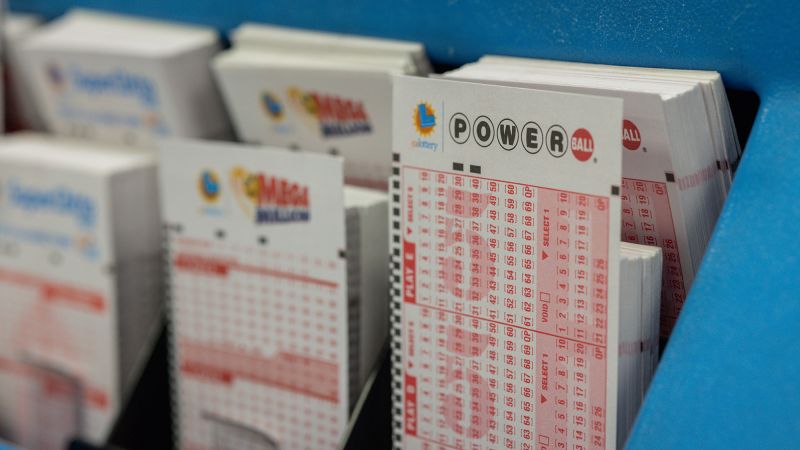
The Billion-Dollar Paradox: How Powerball's Sky-High Jackpot Could Be a Mega Setback for Its Rival
The buzz around Powerball's latest colossal jackpot, potentially soaring past the billion-dollar mark, has captivated the nation. As hopefuls line up for their chance at life-altering wealth, a fascinating dynamic unfolds behind the scenes. While the Powerball frenzy guarantees massive ticket sales, its unprecedented scale might be causing an unexpected ripple effect, potentially sidelining its long-standing rival, Mega Millions. This isn't just about who wins the prize; it's about the intricate ecosystem of multi-state lotteries and the strategic battle for player attention.
The Anatomy of a Billion-Dollar Fever
For weeks, the Powerball jackpot has steadily climbed, a testament to its compelling odds and the collective dreams of millions. The threshold of a billion dollars transforms a large lottery win into a phenomenon. It moves beyond a mere game of chance to a cultural event, dominating news cycles and water cooler conversations. This escalating media attention acts as a powerful, albeit indirect, marketing tool, drawing in not just regular lottery players but also casual participants who might rarely buy a ticket.
The source data highlights that Powerball tickets, priced at $2 apiece, are selling at a furious pace. This accelerated purchasing behavior is fueled by a simple psychological principle: the larger the prize, the more compelling the dream. The perceived value of winning a billion dollars, even with astronomical odds, vastly overshadows the investment of a few dollars. It's an aspirational purchase, a ticket to imagining a life without financial constraints.
The Cannibalization Effect: Mega Millions' Unintended Loss?
Herein lies the paradox: while Powerball revels in record-breaking sales, its success might come at a direct cost to its primary competitor. Mega Millions, itself no stranger to nine-figure jackpots, suddenly appears less appealing when Powerball commands a prize several multiples larger. The description explicitly states, "at least one of the losers might already be known: Mega Millions." This isn't to say Mega Millions isn't offering substantial prizes; rather, it's a matter of comparative attraction.
When faced with two lotteries, even if one offers $200 million and the other $1 billion, the human brain is often drawn to the absolute highest figure. The difference between $200 million and $1 billion is not just an extra $800 million; it's the difference between a very wealthy life and an unimaginably wealthy life, a psychological chasm that many players choose to bridge with their lottery dollars. This 'cannibalization' effect suggests that a significant portion of the lottery-playing public has a finite budget for tickets, and that budget is overwhelmingly directed towards the largest available prize.
Beyond the Jackpot: Economic and Social Implications
The frequent occurrence of mega-jackpots in recent years speaks to a broader trend. Changes in lottery rules, such as increased number pools, have made it harder to win the top prize, leading to more frequent rollovers and consequently, larger jackpots. This strategy, while frustrating for individual players, proves highly effective in generating public interest and driving sales, ultimately boosting state revenues that fund various public services.
However, the intense focus on multi-billion dollar prizes also raises questions about sustainability and player welfare. Are lotteries becoming too reliant on these outlier events to maintain public engagement? What are the long-term effects on the perceived value of smaller, yet still life-changing, jackpots? The competition between Powerball and Mega Millions, while seemingly a zero-sum game in the short term, could also push both lotteries to pursue even higher ceilings, potentially setting new normals for 'mega' prizes.
The Future of Fortune: An Ever-Escalating Arms Race?
As Powerball continues its historic run, the dynamics observed provide a blueprint for the future of multi-state lotteries. We may be entering an era where billion-dollar jackpots are not just anomalies but increasingly regular occurrences. This could lead to a strategic 'arms race' where Powerball and Mega Millions continually vie for the attention of players by pushing their jackpots higher and faster. While exciting for ticket holders, it presents a complex challenge for the lottery commissions to manage public expectations and maintain responsible play.
Ultimately, the Powerball phenomenon underscores a fundamental truth about human nature: the allure of an unimaginable fortune is a powerful motivator. And in the high-stakes world of multi-state lotteries, the biggest prize often dictates who plays, and in this current climate, who might be left trailing.