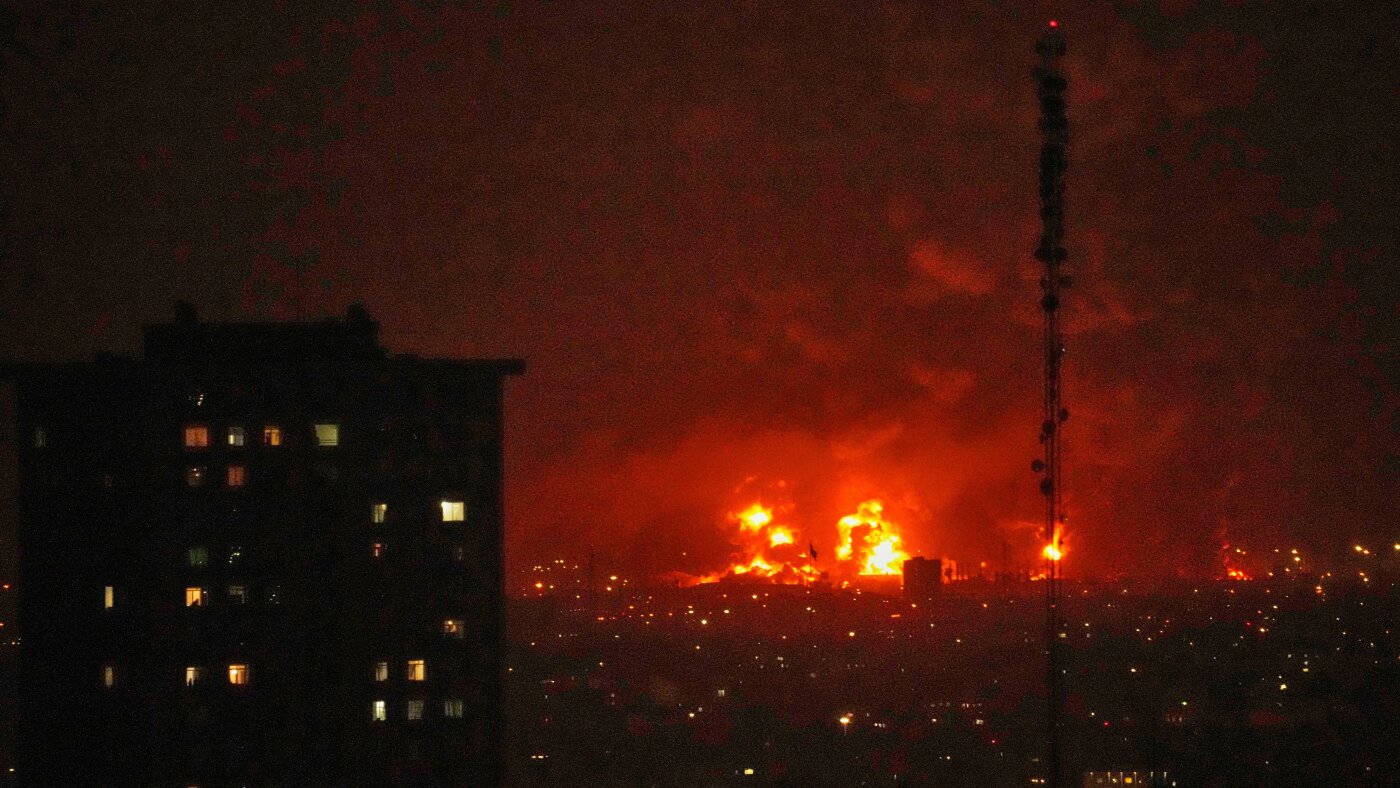
Flames of Escalation: Israel Strikes Iranian Oil, Raising Stakes in a Widening Conflict
The Middle East teeters on a precipice following a series of stark developments: the tragic loss of another American service member, and an unprecedented Israeli assault on Iran's critical oil infrastructure. These events signal a dangerous new phase in a conflict that has long simmered beneath the surface, now threatening to erupt into a full-blown regional conflagration with global repercussions.
The Unfolding Crisis: A Week of Dire News
Sunday marked a grim milestone as the American military confirmed the death of its seventh service member in the U.S. and Israel's ongoing war with Iran. Each loss underscores the escalating human cost of this multifaceted conflict, which, while often waged through proxies and covert operations, increasingly demands direct sacrifice. This somber announcement was almost immediately overshadowed by news of a significant tactical shift: early Sunday, Israel launched its first-ever direct attack on Iran's domestic oil facilities. Videos emerging from the region depicted enormous flames engulfing these vital installations, sending a clear, unambiguous message from Jerusalem to Tehran.
Israel's Strategic Gambit: Targeting Iran's Lifeblood
For years, Israel has pursued a strategy of degrading Iranian capabilities through cyberattacks, targeted assassinations, and support for opposition groups, largely avoiding direct military strikes on Iranian soil. The decision to target Iran's oil depots represents a profound escalation, shifting the conflict from the shadows to a more overt and economically crippling front. Iran's oil exports are the primary lifeline for its economy, financing its military, its nuclear program, and its extensive network of regional proxies, including Hezbollah in Lebanon, Houthi rebels in Yemen, and various militias in Iraq and Syria.
The immediate objectives of such a strike are multifaceted. Economically, it aims to choke off Iran's revenue streams, thereby limiting its capacity to project power and fund its strategic ambitions. Militarily, it signals Israel's willingness to cross previously observed red lines, demonstrating a heightened resolve to counter what it perceives as an existential threat. Politically, it aims to put immense pressure on the Iranian regime, both externally and potentially by fueling internal discontent as economic hardship mounts.
Iran's Dilemma and Potential Responses
Tehran now faces a critical juncture. The direct assault on its sovereign territory, particularly on assets so crucial to its national survival, demands a response. However, the nature and scale of that response will be fraught with risk. Iran's traditional playbook involves leveraging its proxies to strike Israeli or American interests in the region, or disrupting global shipping lanes, especially through the Strait of Hormuz. Direct military retaliation against Israel, however, could invite an even more devastating counter-response, potentially spiraling into a full-scale conventional war that Iran's conventional forces are ill-equipped to win against a technologically superior adversary.
The internal political climate in Iran, reportedly characterized by a consensus on the succession of the Ayatollah, adds another layer of complexity. A leadership transition, even if orderly, could coincide with increased external pressure, potentially forcing hardliners to adopt a more aggressive posture to demonstrate strength and continuity, or conversely, encouraging a more cautious approach to avoid destabilizing the nation during a sensitive period.
The U.S. Role and Global Implications
The U.S. remains deeply entangled in this volatile equation. The death of American service members underscores the direct involvement and the sacrifices being made. While the U.S. has often sought to de-escalate tensions, its strategic alliance with Israel and its broader interests in regional stability and the free flow of oil mean it cannot remain a passive observer. Any significant escalation could force Washington into more direct intervention, with profound implications for its foreign policy and domestic political landscape.
Globally, the impact on oil markets would be immediate and severe. A disruption to Iranian oil production or, more critically, to shipping lanes in the Persian Gulf, would send crude prices soaring, potentially triggering a global economic downturn. Furthermore, the conflict's expansion could draw in other regional and international powers, creating a wider, unpredictable security crisis.
A Dangerous Crossroads
The Israeli strikes on Iran's oil facilities, coupled with the continued human toll on American forces, mark a perilous inflection point in the U.S.-Israel-Iran conflict. The red lines are blurring, and the potential for miscalculation is alarmingly high. As flames consume Iranian oil infrastructure, the region holds its breath, aware that the path forward is fraught with the gravest dangers, demanding judicious diplomacy and strategic restraint to avert a catastrophe that could reshape the Middle East for generations.