The Martian Enigma: Decoding the Mysterious Cylinder Captured by NASA's Curiosity Rover
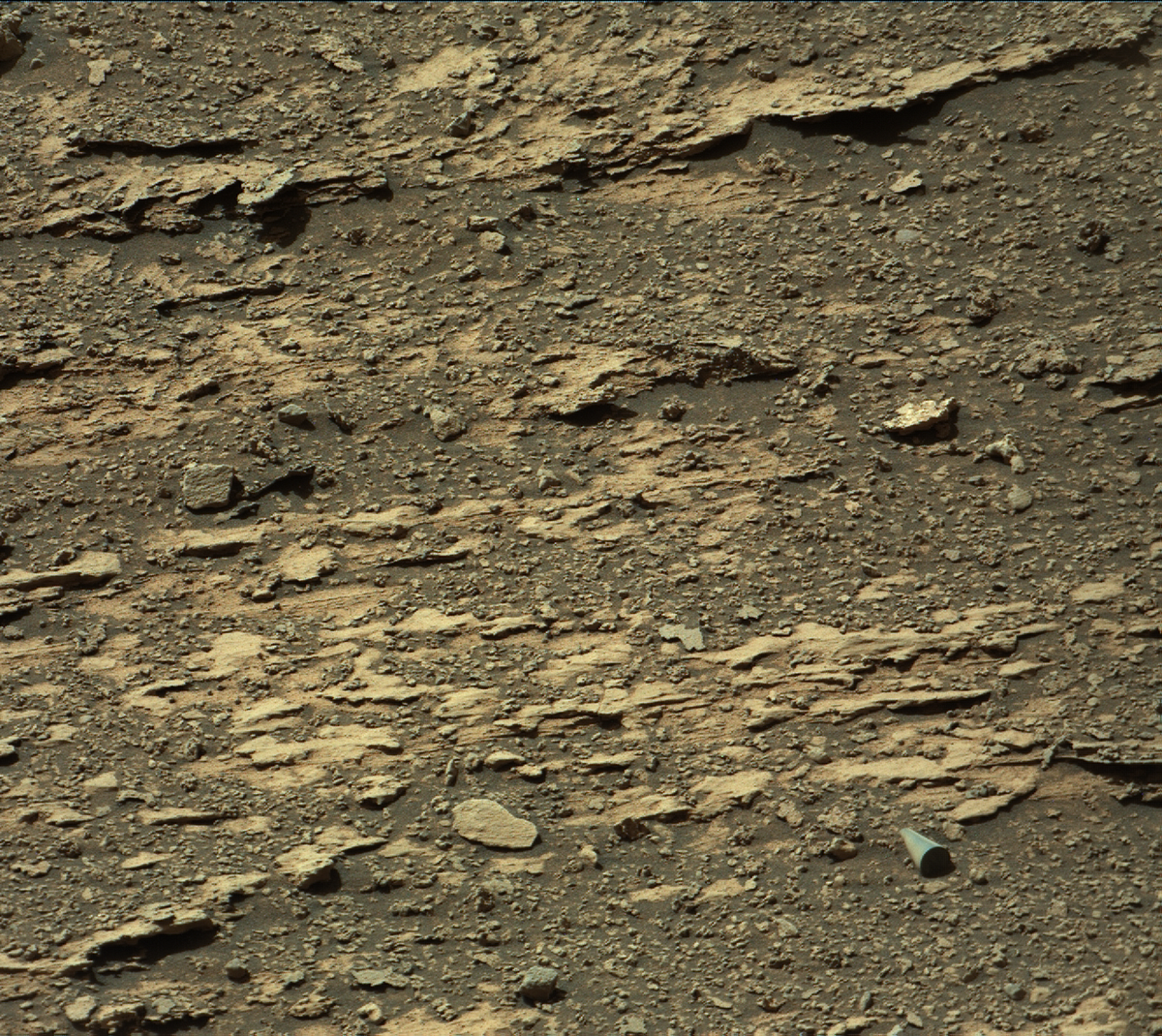
In the vast, crimson expanse of Mars, where the silent hum of scientific instruments often outpaces human imagination, NASA's Curiosity rover continues its diligent exploration. Yet, in August 2022, one particular raw image beamed back to Earth stirred more than just routine scientific interest. It depicted a strangely geometric, cylinder-like object nestled amidst the dust and rocks, igniting a fresh wave of speculation: was this merely a peculiar geological formation, or something far more extraordinary?
Curiosity's Gaze: A Moment Frozen in Time
Captured by Curiosity's Mastcam on August 7, 2022, at 20:58:23 UTC, the image quickly circulated through online forums and scientific communities. What caught the eye was an object seemingly out of place—a dark, elongated form exhibiting an unusual degree of symmetry and a cylindrical appearance. For many, the immediate reaction was to question its origin. Mars is, after all, a planet largely shaped by aeolian processes and volcanic activity, which typically produce irregular, weathered rock formations, not seemingly manufactured shapes.
The Avi Loeb Factor: Challenging Conventional Wisdom
The discussion gained significant traction with the involvement of Harvard Professor Avi Loeb, a prominent astrophysicist known for his controversial hypotheses regarding extraterrestrial intelligence. Loeb, who previously speculated about the interstellar object 'Oumuamua' being alien technology, brought his characteristic perspective to the Martian cylinder. While many scientists initially dismissed the object as a mere trick of light, shadow, or pareidolia—the psychological phenomenon of perceiving recognizable patterns in random or ambiguous stimuli—Loeb encouraged a more open-minded approach, urging deeper analysis.
Pareidolia vs. Anomaly: The Scientific Dilemma
The history of Mars exploration is replete with instances where initial observations of unusual shapes were later attributed to natural processes. From the "Face on Mars" in the Viking 1 photographs of 1976 to various "bones" or "creatures" spotted in more recent rover images, the human brain's tendency to find familiar patterns is a powerful one. Scientists are therefore trained to be rigorously skeptical, demanding multiple lines of evidence before accepting anything as genuinely anomalous. The cylindrical object on Mars falls squarely into this challenge.
Potential Explanations: Natural vs. Anthropogenic vs. Extraterrestrial
When confronted with such an object, several hypotheses emerge:
- Geological Formation: The most prosaic and scientifically preferred explanation is that the cylinder is a naturally occurring rock formation. Martian geology is diverse, and unique erosion patterns, especially involving wind and sediment, can sculpt rocks into surprisingly regular shapes. It could be a specific type of concretion or an oddly weathered boulder.
- Mission Debris: Another possibility, albeit less likely for an object of this apparent integrity, is that it's debris from previous human missions. Given the object's distinct cylindrical shape and lack of obvious fragmentation, this explanation would require a very specific set of circumstances.
- Extraterrestrial Artifact: This is the most provocative hypothesis, championed by figures like Loeb. If the object truly possesses artificial characteristics—perfect symmetry, unusual material composition, or a non-natural placement—it would demand a radical re-evaluation of our understanding of Martian history and the potential for life beyond Earth. Such a discovery would be a paradigm shift for humanity.
The Path Forward: Rigor and Observation
Regardless of the initial excitement or skepticism, the scientific method dictates a clear path. Further analysis of the original image, comparisons with other Martian geological features, and ideally, closer examination by the rover itself—if its mission parameters allow for such a detour—would be crucial. Spectroscopic analysis, if possible, could reveal the object's composition, providing vital clues. Without additional data, any conclusion remains speculative.
Implications for Future Space Exploration
The "Mars Cylinder" incident, whether it ultimately proves to be a geological marvel or something truly unprecedented, underscores the profound public fascination with the unknown. Such images serve as powerful catalysts for public engagement in space exploration, reminding us that Mars still holds countless secrets. Each anomaly, no matter how fleeting, propels us to look harder, to question deeper, and to continue pushing the boundaries of our knowledge about the cosmos and our place within it. The quest for answers to these Martian enigmas continues, driven by both meticulous science and the enduring human spirit of discovery.