Escalation in the Gulf: Trump's Widened Threats and the Perilous Path Forward
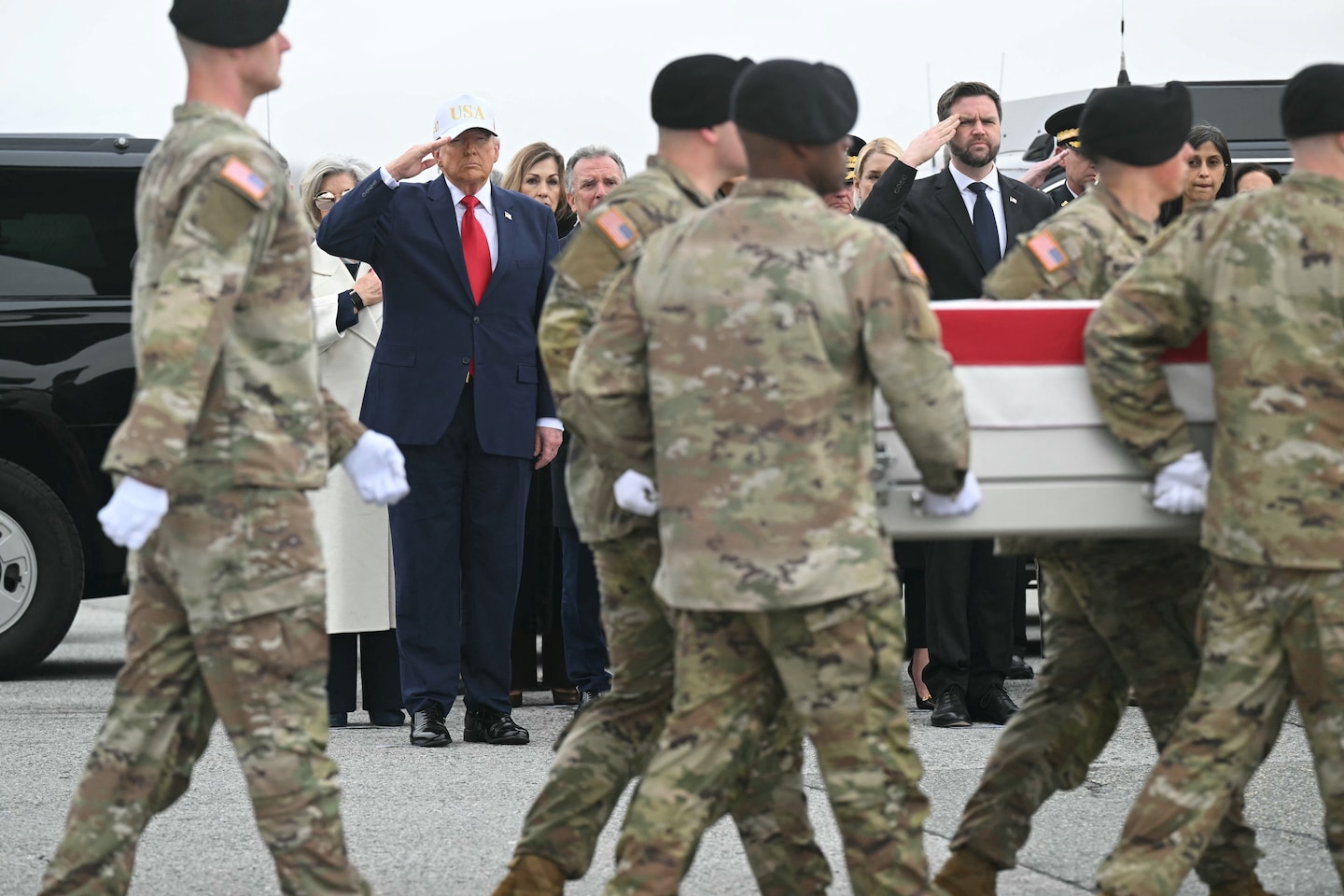
In a stark pronouncement following a solemn ceremony honoring fallen U.S. service members at Dover Air Force Base, President Donald Trump declared a significant shift in the American stance towards Iran. The President stated that the United States would 'expand its targets' in the conflict, a direct response to Iran's president dismissing the notion of surrender and offering apologies to neighboring countries caught in the escalating tensions. This declaration marks a dangerous turning point, moving beyond mere rhetoric to signal a potentially broader and more aggressive military engagement.
The Immediate Context: A Line Drawn in the Sand
The backdrop to President Trump's announcement is one of persistent tension. For months, the region has been a tinderbox, with incidents ranging from tanker attacks to drone downings and retaliatory strikes. Iran's steadfast refusal to capitulate to U.S. demands, encapsulated by its president's defiant posture, has clearly pushed the Trump administration to re-evaluate its strategy. While honoring those lost in service is a solemn duty, pairing it with a threat of expanded military action sends a clear, chilling message: the U.S. is preparing for a deeper commitment.
What Does 'Expand Targets' Truly Mean?
The phrase 'expand targets' is deliberately vague yet profoundly alarming. Historically, U.S. military engagements have involved carefully calibrated targeting to achieve specific objectives. Expanding these targets could imply several scenarios:
- Geographic Expansion: Moving beyond existing, limited engagement zones to encompass a wider array of Iranian military infrastructure, assets, or even leadership compounds.
- Tactical Expansion: Shifting from defensive or retaliatory strikes to more proactive, preemptive operations.
- Broadening Target Categories: Including not just specific military sites but potentially elements of Iran's Revolutionary Guard Corps (IRGC) or its proxy forces across the region, irrespective of their immediate involvement in a direct U.S. confrontation.
- Cyber Warfare: A significant increase in cyber operations targeting critical Iranian infrastructure, which could have far-reaching and unpredictable consequences.
Each of these possibilities carries immense risk, not just for U.S. personnel and regional stability, but for the global economy and international relations.
Regional and Global Implications
An expanded U.S. military footprint or aggressive posture in the Gulf promises to ripple across the globe. Regional allies, particularly Saudi Arabia and the UAE, will watch closely, potentially emboldened or alarmed depending on their strategic outlook. Countries like Iraq, already caught between U.S. and Iranian influence, face heightened instability. Furthermore:
- Oil Markets: Any significant escalation would almost certainly send oil prices soaring, impacting global economies already grappling with uncertainty.
- Humanitarian Crisis: The potential for widespread conflict always brings with it the specter of a humanitarian crisis, adding to the already immense challenges in the Middle East.
- International Diplomacy: The international community, including European powers and Asian economic giants, would be compelled to intervene diplomatically, potentially creating new alliances or further fracturing existing ones.
- Domestic Politics: For the U.S., a widened conflict would inevitably become a dominant issue in domestic politics, shaping public opinion and electoral outcomes.
The Path Forward: De-escalation or Deeper Conflict?
President Trump's latest statement suggests a dwindling appetite for purely diplomatic solutions. While the administration's long-term goal for Iran remains opaque, the immediate trajectory points towards a hardening stance. The international community now faces a critical juncture: either push aggressively for de-escalation and renewed dialogue, or brace for the unpredictable consequences of a wider conflict in one of the world's most volatile regions. The stakes could not be higher, and the path forward appears increasingly fraught with peril.