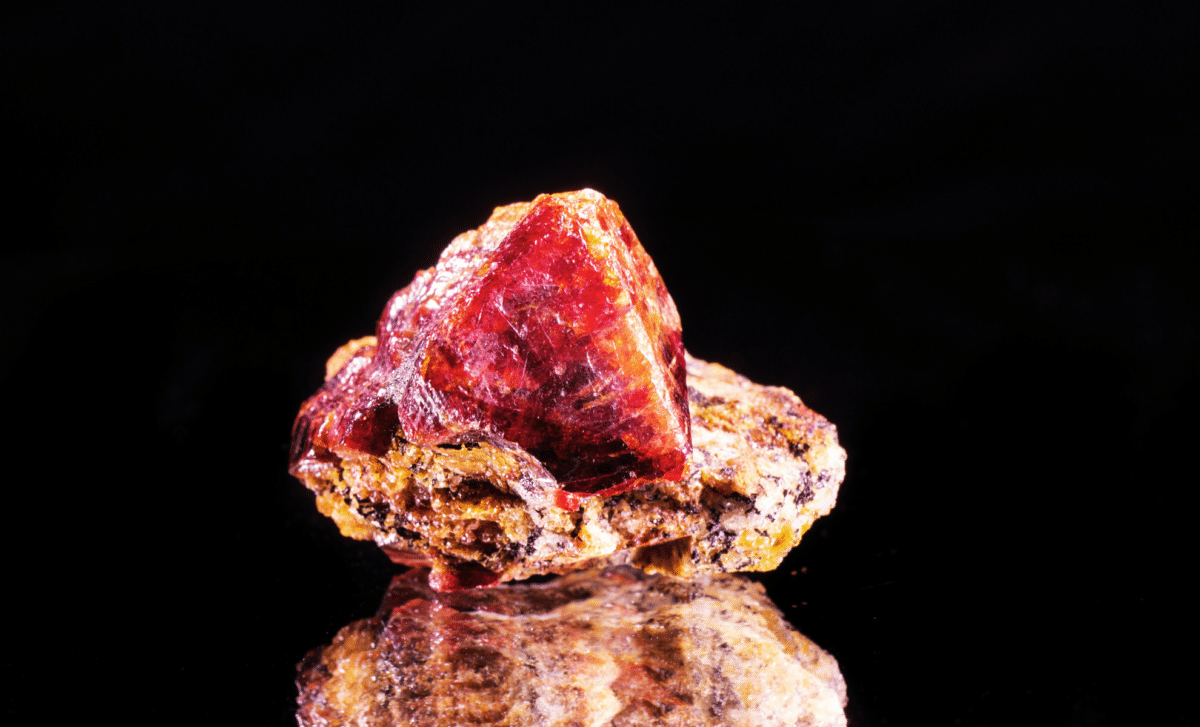
Unlocking Deep Time: How Zircon Crystals Revealed Earth's Staggering 4.54 Billion-Year Saga
For millennia, humanity has grappled with one of the most fundamental questions: how old is our home, Earth? From ancient myths placing its origin just a few thousand years ago to early scientific estimates stretching into the millions, the planet's true antiquity remained shrouded in mystery. Now, thanks to the remarkable resilience of tiny mineral grains – zircon crystals – scientists have definitively pinpointed Earth's age to an astonishing 4.54 billion years, a figure that profoundly reshapes our understanding of planetary evolution and the very origins of life.
The Age-Old Debate and the Quest for Precision
The scientific pursuit of Earth's age is a saga in itself. Pioneers like James Hutton and Charles Lyell established uniformitarianism in geology, suggesting Earth must be vastly old for geological processes to shape it. Lord Kelvin, in the late 19th century, attempted to calculate Earth's age based on its cooling rate, arriving at estimates of 20 to 400 million years. While groundbreaking for its time, Kelvin's calculations predated the discovery of radioactivity, a crucial internal heat source that sustained Earth's warmth far longer than he could imagine.
The advent of radiometric dating in the early 20th century revolutionized this quest. Scientists realized that the predictable decay of radioactive isotopes within rocks acted as a geological clock. By measuring the ratio of parent isotopes to their stable daughter products, the age of a rock could be determined with unprecedented accuracy. However, finding rocks that truly represent Earth's primordial crust, undisturbed by billions of years of geological activity, proved exceptionally challenging.
Zircon: Nature's Indestructible Time Capsules
Enter the zircon crystal. These minuscule but mighty minerals, typically no larger than a grain of sand, are veritable geological superheroes. Formed from magma and found in various igneous and metamorphic rocks, zircon (zirconium silicate) possesses an extraordinary ability to withstand geological forces that would destroy most other minerals. They are highly resistant to chemical alteration, erosion, and even extreme heat and pressure, making them perfect 'time capsules' for preserving atomic information.
Crucially, zircon crystals have a unique crystal lattice that readily incorporates uranium atoms during their formation but strongly rejects lead. As uranium radioactively decays into lead over billions of years, the lead atoms become trapped within the zircon's structure. This 'Uranium-Lead (U-Pb) dating' method is incredibly precise because it uses two independent decay chains, offering a robust cross-check on the age determination.
Pinpointing the Primordial Past: 4.54 Billion Years
The definitive age of 4.54 billion years wasn't derived from a single crystal, but from a painstaking process involving thousands of measurements from zircons found in some of Earth's oldest known rocks, particularly from the Jack Hills region of Western Australia. These ancient zircons, some dating back 4.4 billion years, provided direct evidence of early crustal formation. However, to determine the *initial* formation of the Earth itself, scientists also analyzed meteorites. Meteorites represent the primordial material from which our solar system, including Earth, accreted. By dating these meteorites, especially chondrites, which have largely remained unaltered since the solar system's birth, scientists established a consistent age for the formation of solid bodies in our cosmic neighborhood.
The consensus age of 4.54 billion years (with an uncertainty of about 50 million years) is thus a triangulation based on the oldest known Earth materials and the oldest, most pristine solar system materials. This figure marks the point at which Earth had largely accreted and differentiated into its core, mantle, and initial crust.
Profound Implications for Planetary Science and Beyond
Confirming Earth's age with such precision carries immense implications:
- Planetary Formation Models: This age strongly supports current models of solar system formation, where planets accreted from a swirling disk of gas and dust over tens of millions of years.
- Early Earth Conditions: Knowing the precise start date allows geologists to better model the tumultuous Hadean Eon (4.54 to 4.0 billion years ago), a period characterized by intense volcanism, heavy bombardment, and the formation of Earth's first oceans and atmosphere. It provides a timeline for the conditions that set the stage for life.
- The Origin of Life: A 4.54-billion-year timeline provides a robust framework for astrobiologists studying the origin and early evolution of life. With evidence of microbial life emerging as early as 3.8 to 4.1 billion years ago, a longer, more accurately defined geological timescale means a vast, albeit dynamic, window for abiogenesis to occur.
- Comparative Planetology: Understanding Earth's specific timeline helps in comparing our planet's evolution with that of Mars, Venus, and other celestial bodies, refining our understanding of what makes a planet habitable or uninhabitable.
Looking Ahead: The Unfolding Story
The precise dating of Earth’s birth is a testament to the power of scientific inquiry and the ingenuity of researchers. It’s not merely a number; it’s the bedrock upon which our entire understanding of Earth’s history is built. Every geological process, every evolutionary step, every climatic shift now fits into this grand, accurately defined narrative.
As we continue to explore our planet and the cosmos, these tiny zircon crystals remain silent witnesses, urging us to delve deeper into the mysteries of deep time, revealing that our ancient Earth is far more magnificent and resilient than we ever imagined.