Cosmic Chameleon: Interstellar Comet 3I/ATLAS Dazzles with Intensified Green Glow and Brightness
By The NovaPress Science Desk | Published: October 27, 2023
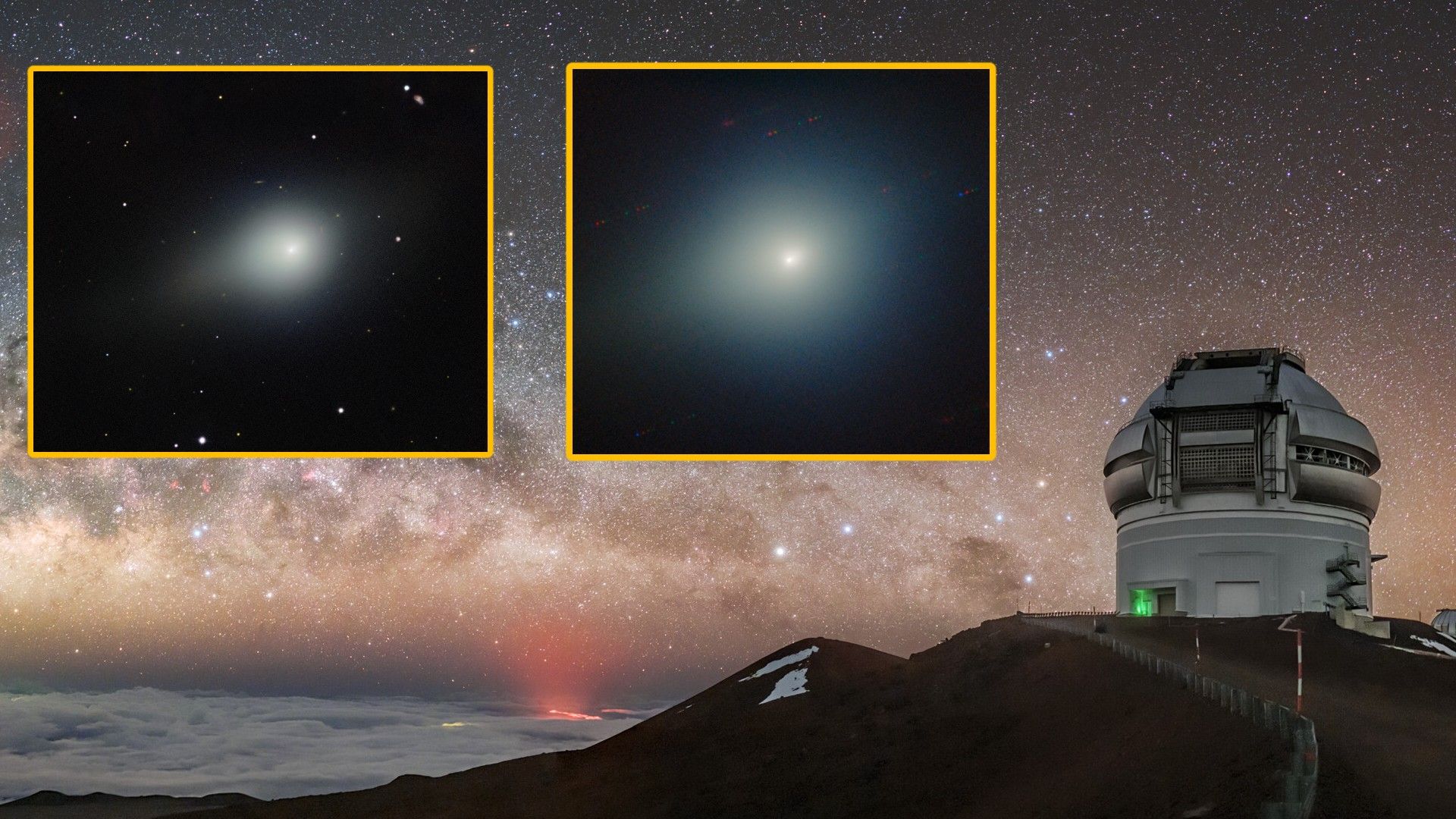
In a spectacular display that has captivated the astronomical community, the enigmatic interstellar comet 3I/ATLAS is undergoing a dramatic transformation. Recent high-resolution images captured by the formidable Gemini North telescope in Hawaii confirm a significant increase in both its luminosity and its distinctive green hue. This celestial performance, following its close encounter with the sun in late October, offers scientists an unprecedented window into the composition and behavior of objects originating from beyond our solar system.
An Interstellar Enigma Brightens and Greens
Comet 3I/ATLAS, an object of immense scientific intrigue since its identification as only the second known interstellar visitor, continues to defy expectations. Its journey through our cosmic neighborhood provides a rare opportunity to study pristine material from another star system. The recent observations are particularly thrilling because the brightening and greening indicate a significant increase in activity, likely due to the comet's icy core sublimating more vigorously as it heats up. This outgassing phenomenon creates the comet's characteristic coma and tail, and in the case of 3I/ATLAS, a vibrant green glow.
The Science Behind the Green Glow
The green coloration in comets is typically attributed to the presence of diatomic carbon (C2), a gaseous molecule that emits light at specific wavelengths when excited by solar radiation. As 3I/ATLAS drew nearer to the sun, the increased solar radiation likely broke down larger organic molecules on its surface into C2, which then fluoresced in the visible spectrum. The heightened brightness suggests not only more C2 production but also a greater overall ejection of material, providing a wealth of spectroscopic data for analysis.
Unlocking Secrets from Another Star System
The significance of observing an interstellar object like 3I/ATLAS cannot be overstated. Unlike comets native to our solar system, which formed from the same primordial cloud as our planets, 3I/ATLAS originated in a different stellar nursery, potentially carrying unique chemical signatures. Its intensified activity now means that scientists have an even better chance to analyze the composition of its coma and tail, potentially revealing clues about the conditions and materials present in its home star system. This comparative planetology, extended to exoplanetary systems, is a cornerstone of modern astrophysics.
The Role of Gemini North and Future Implications
The Gemini North telescope, perched atop Maunakea in Hawaii, is a twin 8.1-meter optical/infrared telescope renowned for its cutting-edge adaptive optics and sensitivity. Its ability to capture these detailed images underscores the critical role of ground-based observatories in tracking and characterizing fast-evolving transient astronomical events. As 3I/ATLAS continues its journey, astronomers will meticulously track its trajectory and monitor its activity, hoping to gather more data before it recedes into the vastness of interstellar space.
The information gleaned from 3I/ATLAS will not only deepen our understanding of comet formation and evolution but also offer a rare glimpse into the diversity of planetary building blocks across the cosmos. Each shimmer and glow from this interstellar traveler brings us closer to comprehending the myriad ways in which star systems and their accompanying objects come into being.
Stay tuned to NovaPress for the latest updates on this remarkable interstellar visitor and other groundbreaking scientific discoveries!