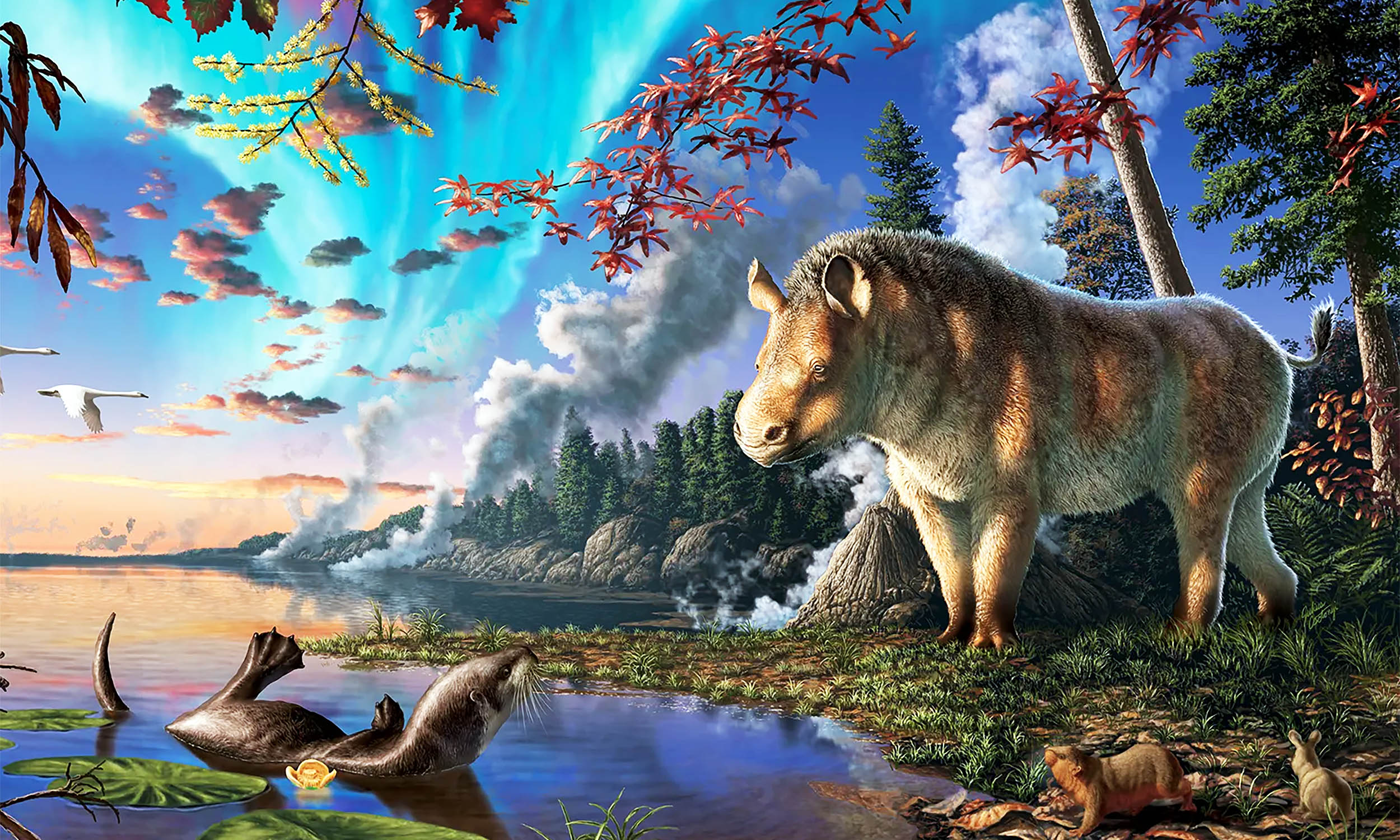
Echoes from the Ice: Unearthing the 23-Million-Year-Old 'Frosty Rhino' and Rewriting Arctic History
The Canadian High Arctic, with its unforgiving landscape of ice and tundra, conjures images of polar bears, seals, and hardy arctic foxes. Yet, beneath its permafrost, a groundbreaking discovery has forced paleontologists and climate scientists to rethink this stark image entirely. Researchers on Devon Island have unearthed the nearly complete skeleton of an ancient, hornless rhinoceros, Epiaceratherium itjilik, that roamed this polar region an astonishing 23 million years ago. This 'frosty rhino' is not merely an interesting fossil; it's a profound portal into Earth’s deep past, challenging our perceptions of ancient ecosystems and providing critical context for understanding planetary climate dynamics.
A Glimpse into the Miocene Arctic: A World Transformed
Twenty-three million years ago, during the Early Miocene epoch, the High Arctic was a vastly different place. Far from the barren, frozen expanse we know today, evidence suggests a landscape teeming with life, supported by a much warmer climate. The discovery of Epiaceratherium itjilik—a distant relative of modern rhinos but without the characteristic horn—is powerful testament to this ancient warmth. Its presence on Devon Island, one of the world's largest uninhabited islands, currently characterized by a polar desert climate, implies lush, temperate forests or woodlands that could sustain large browsing mammals.
This dramatic shift in environmental understanding forces us to consider the mechanisms that shaped our planet’s climate in deep time. How did the Arctic maintain such warmth at such high latitudes? The answers lie buried not just in fossils, but in geological records, sediment cores, and paleobotanical evidence that, combined, paint a picture of an Earth with vastly different oceanic currents and atmospheric compositions.
The Unearthing of Epiaceratherium itjilik: A Scientific Triumph
The arduous conditions of Arctic fieldwork make any significant fossil find a monumental achievement. The discovery of a nearly complete skeleton of Epiaceratherium itjilik is particularly remarkable. Such completeness offers an unparalleled opportunity for detailed anatomical study, providing crucial insights into the rhino's physiology, diet, and perhaps even its behavior. Its hornless nature is intriguing, suggesting an evolutionary path distinct from its modern relatives, possibly adapted to the specific flora of its ancient Arctic habitat.
Moreover, the precise dating of the fossil to 23 million years ago anchors this discovery firmly within the Early Miocene, a period of significant global warming known as the Miocene Climatic Optimum. This timing is critical, as it allows scientists to correlate the rhino's presence with specific global climatic conditions, enhancing our models of past climate and environmental change.
Beyond the Bone: Future Implications and Climate Lessons
The 'frosty rhino' is more than just a captivating ancient beast; it's a stark reminder of Earth's incredible climatic variability. Its existence in the Arctic highlights a fundamental truth: our planet has experienced periods of dramatic warmth, even at the poles. Understanding how these past 'greenhouse' worlds functioned, what sustained them, and how life adapted within them, offers invaluable lessons for a world grappling with contemporary climate change.
Researchers will now delve deeper into the specific environmental conditions that allowed rhinos to thrive so far north. Was it merely warmer temperatures, or were there unique atmospheric and oceanic circulation patterns that prevented the formation of substantial ice sheets? The answers could refine our climate models, improve predictions of future warming scenarios, and inform strategies for biodiversity conservation in a rapidly changing world.
The discovery of Epiaceratherium itjilik underscores the vast, unexplored paleontological potential of the Arctic. As ice recedes and permafrost thaws, more secrets of ancient life and climate are likely to emerge from the frozen ground, continuing to rewrite our understanding of Earth's remarkable history and its precarious future.