Unearthing Earth's Lost Billion Years: Scientists Unravel The Great Unconformity's Enduring Mystery
A colossal gap in Earth's geological record has puzzled scientists for over a century. Now, groundbreaking research offers a compelling explanation for the missing billion years, reshaping our understanding of deep time and life's origins.
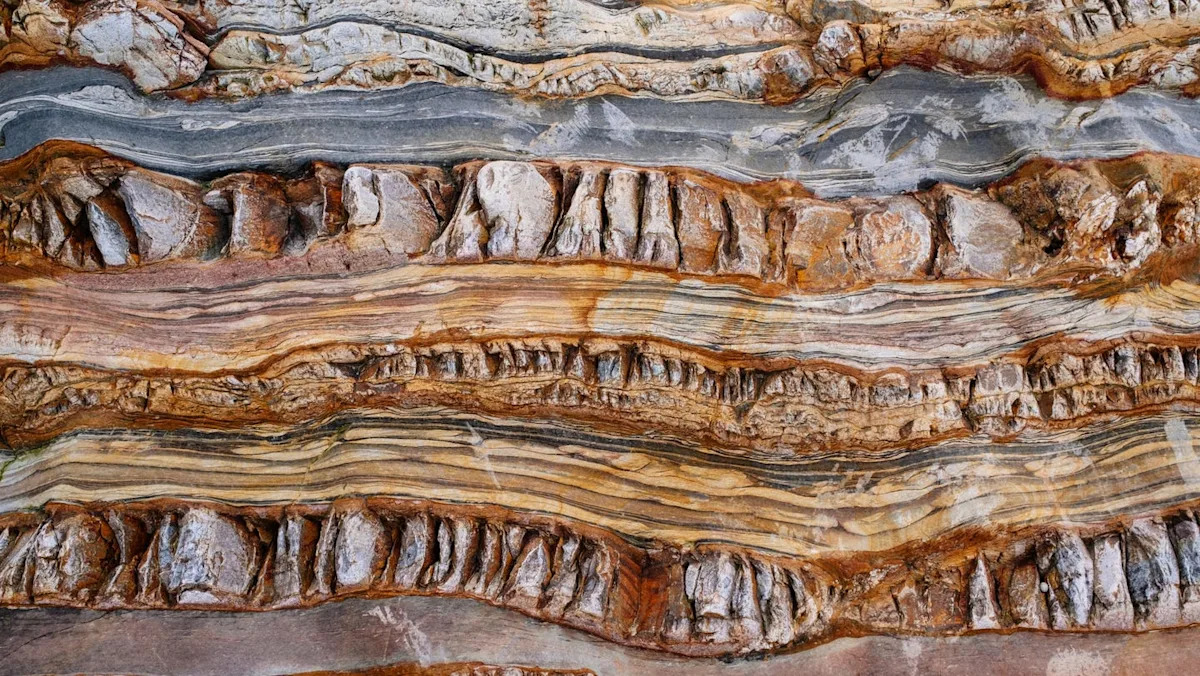
Imagine trying to read a book where an entire saga – a billion pages worth – is simply torn out. This is the enduring enigma that has haunted geologists for generations: a massive, global hiatus in Earth's rock layers known as The Great Unconformity. In outcrops around the world, ancient rocks, some billions of years old, are found directly beneath much younger ones, often from the Cambrian period, with no trace of the vast epoch in between. This colossal geological gap represents a staggering one-billion-year void in our planet's history, a silent testament to a period of intense, planet-altering events.
The Century-Old Puzzle: What is The Great Unconformity?
First observed by John Wesley Powell during his historic expedition down the Grand Canyon in 1869, The Great Unconformity is not a single event but a collection of unconformities found on every continent. It marks a period roughly between 1.7 billion and 550 million years ago, where layers of rock expected to be present are simply absent. For decades, scientists have grappled with its origins, pondering what cataclysmic forces could have simultaneously erased so much of Earth's crust across vast geographical distances. Was it a single, synchronized event, or a confluence of independent processes?
The Breakthrough: A Global Scouring Event
Recent groundbreaking research, leveraging advanced geochemical analysis and paleomagnetic data, suggests a compelling, unified explanation. Scientists now propose that the missing billion years were largely erased by a series of colossal, global-scale erosion events, primarily driven by the dynamic forces associated with the assembly and breakup of Rodinia, Earth's first supercontinent, followed by subsequent 'Snowball Earth' glaciations.
The theory posits that as Rodinia formed, vast continental landmasses collided, leading to significant uplift and mountain building. This created immense elevated terrains that were then subjected to accelerated erosion. When Rodinia began to rift apart approximately 750 million years ago, this fragmentation was accompanied by massive volcanic activity and further tectonic upheaval. The resulting landscape, now fragmented and exposed, became highly vulnerable to weathering.
Glaciers, Plate Tectonics, and the Scourge of Erosion
Crucially, this period also coincided with several severe global glaciation events, colloquially known as 'Snowball Earth'. During these epochs, vast sheets of ice covered much of the planet, even reaching the equator. Glaciers are incredibly powerful agents of erosion, scraping away enormous volumes of rock as they advance and retreat. The combination of continent-scale uplift and fragmentation due to Rodinia's tectonics, coupled with the immense erosive power of global glaciations, acted like a planetary sandblaster, systematically removing layers of rock that had formed over a billion years.
This new understanding suggests that the 'missing' rocks weren't just not deposited; they were actively destroyed and transported away, their remnants eventually settling as sediments elsewhere or being subducted into Earth's mantle. The sheer volume of material removed profoundly altered Earth's surface and even influenced ocean chemistry, potentially setting the stage for the dramatic burst of life that followed.
Implications for Life and Earth's Future
Solving the mystery of The Great Unconformity has profound implications. Firstly, it offers a more complete picture of Earth's deep history, connecting large-scale tectonic cycles with planetary surface processes. Secondly, it sheds new light on the conditions leading up to the Cambrian Explosion, the period around 541 million years ago when most major animal phyla suddenly appeared in the fossil record. The massive erosion could have delivered vast amounts of nutrients to the oceans, fertilizing the seas and spurring biological diversification.
Furthermore, understanding such extreme cycles of erosion and deposition helps us model future planetary changes. It highlights the dynamic nature of our planet, where seemingly immutable geological records can be dramatically reshaped over vast stretches of time, driven by interconnected forces of plate tectonics, climate, and even life itself. This discovery isn't just about what was lost, but about what we can now finally comprehend about the enduring processes that sculpt our world.