Tech Titans at a Crossroads: Nvidia's AI Investment Rethink Meets Apple's M5 Powerhouse
The tech world is abuzz, caught between the seismic shifts in Artificial Intelligence investment and Apple's relentless march in silicon innovation. As Nvidia braces for its critical fourth-quarter earnings, whispers from CEO Jensen Huang hint at a potential pivot in the company's relationship with OpenAI. Simultaneously, Apple has once again commanded attention with a significant refresh of its MacBook lineup, powered by the formidable new M5 Pro and M5 Max chips. This week marks a pivotal moment, shaping the contours of market competition and technological direction for years to come.
Nvidia's AI Dominance and the OpenAI Conundrum
All eyes are firmly fixed on Nvidia (NVDA) as it prepares to release its fourth-quarter results after the closing bell on Wednesday. The chipmaker has become the undisputed kingmaker of the AI boom, with its GPUs forming the backbone of virtually every major AI development effort. Investor expectations are sky-high, yet concerns persist regarding the sustainability of the AI market's explosive growth and the competitive landscape.
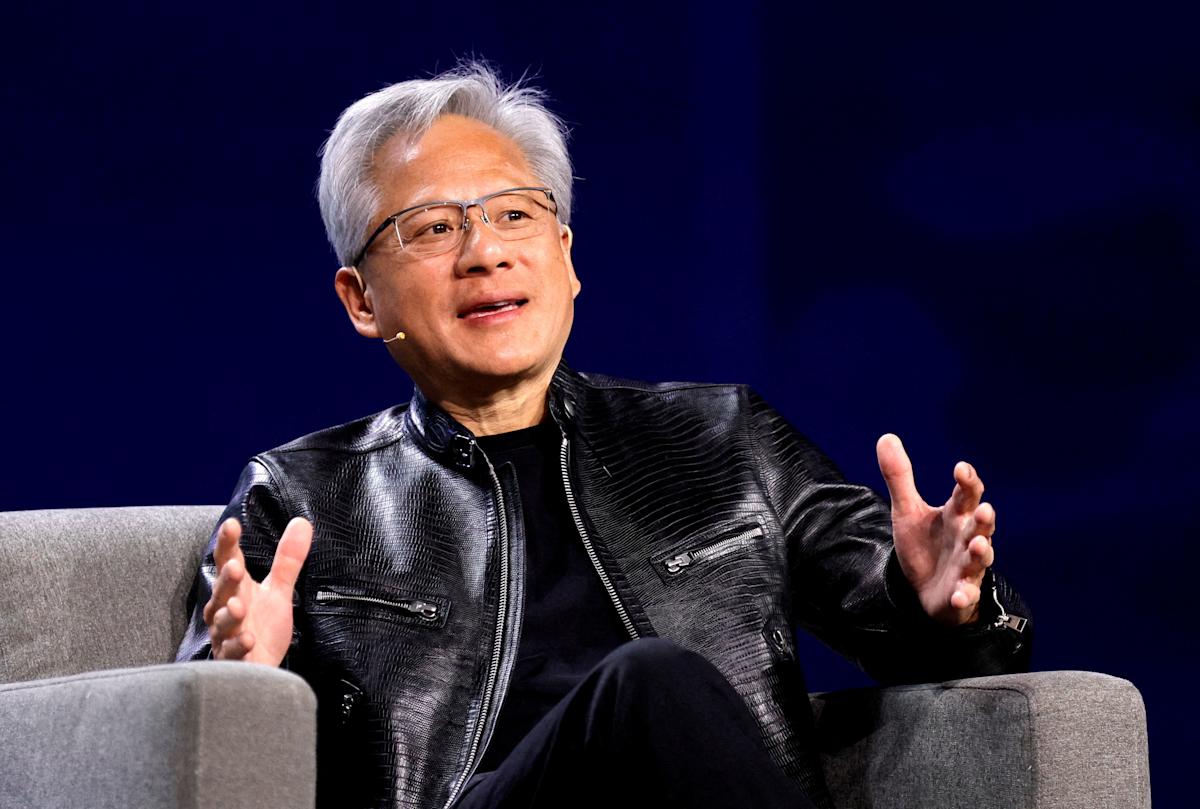
Adding a layer of intrigue, CEO Jensen Huang's recent suggestions about the "end of OpenAI investments" could signal a profound strategic shift. While the exact context and implications are still being parsed, this statement could mean several things:
- Maturity & Self-Sufficiency: OpenAI, having secured massive funding and achieved significant market penetration, may no longer require external investments to scale its operations. This suggests a maturation of the AI application layer.
- Strategic Re-alignment: Nvidia might be shifting its focus from direct equity investments in AI application companies towards strengthening its core business of providing the underlying hardware infrastructure. This could mean more partnerships, direct sales, and ecosystem development.
- Competitive Landscape: As AI becomes increasingly competitive, Nvidia might be wary of investing in one player while potentially alienating others. Alternatively, it could be gearing up to support a broader array of AI innovators, or even develop its own competitive AI services, reducing potential conflicts of interest.
Such a move, if it materializes as a broader strategy, would compel investors to reassess the dynamics of AI funding and the future role of foundational technology providers like Nvidia in the AI value chain. It could herald a period of consolidation or intensified competition among AI model developers.
Apple's Silicon Prowess: The M5 Era Begins
Just as the market grapples with AI investment uncertainties, Apple (AAPL) confidently rolled out its latest hardware innovations, further cementing its commitment to proprietary silicon. The debut of new MacBook Air and MacBook Pro models, featuring the powerful M5 Pro and M5 Max chips, marks another significant leap in performance and efficiency.
- M5 Chips: These new chips are expected to push the boundaries of computational power, graphics rendering, and machine learning capabilities within Apple's laptop lineup. Building on the success of the M1, M2, and M3 series, the M5 chips demonstrate Apple's accelerated chip development cycle, giving it a crucial edge in performance-per-watt over competitors relying on off-the-shelf CPUs.
- MacBook Air & Pro Refresh: The updated MacBook Air, a volume seller, benefits immensely from the M5's efficiency, promising even longer battery life and silent operation for everyday users. The MacBook Pro models, armed with M5 Pro and M5 Max, target professionals in creative industries, software development, and scientific computing, offering workstation-class performance in a portable form factor.
This continuous innovation underscores Apple's successful strategy of vertical integration, allowing tight hardware-software synergy. For consumers, it means more powerful and efficient devices. For competitors like Intel and AMD, it represents an ongoing challenge to keep pace with Apple's rapid silicon advancements, particularly in the premium laptop segment.
Market Implications and Future Trajectories
The convergence of these two major tech narratives – Nvidia's potential AI investment pivot and Apple's M5 launch – will undoubtedly reverberate across global markets. Nvidia's Q4 results will set the tone for the immediate future of AI stock valuations. Any hint of a slowdown in demand or a re-evaluation of AI investment strategies could trigger volatility.
Conversely, Apple's consistent delivery of cutting-edge hardware reinforces its robust ecosystem and pricing power. The M5 chips will likely drive another upgrade cycle, sustaining Apple's revenue streams even amidst broader economic uncertainties. The battle for silicon supremacy continues, with Apple's in-house capabilities proving to be a formidable advantage.
Ultimately, these developments signal a maturing tech landscape where foundational AI infrastructure providers are rethinking their investment strategies, and integrated hardware companies are pushing the boundaries of what's possible in personal computing. Investors and consumers alike will be watching closely as these titans continue to shape the future of technology.