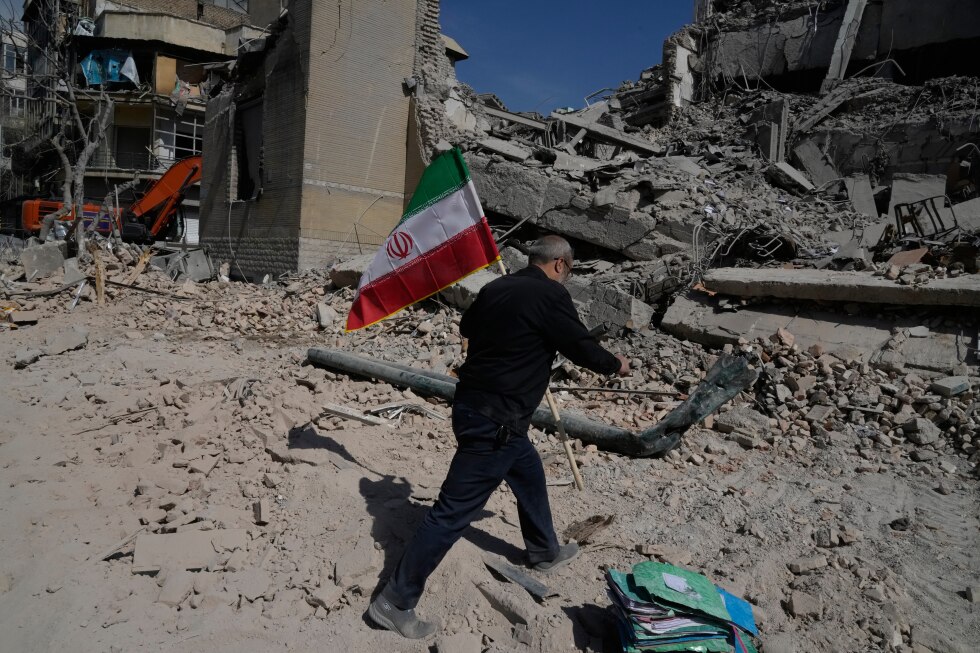
Middle East on the Brink: Iran's Escalating Aggression and the Shifting Sands of US Policy
By NovaPress Staff - Published: [Current Date]
DUBAI, United Arab Emirates – The Middle East finds itself plunged into a fresh and perilous wave of hostilities as Iran launched a new barrage of attacks early Thursday morning, targeting not only Israel but also American bases and strategic assets across the region. This latest escalation, marking the sixth consecutive day of intense conflict, comes with stark warnings from Tehran that the United States will "bitterly regret" any perceived provocations, alongside astonishingly incendiary calls for the blood of former U.S. President Donald Trump.
A Region Ablaze: The Sixth Day of Conflict
The immediate hours of Thursday saw Israel scrambling to intercept multiple incoming attacks, with the Israeli military swiftly announcing new counter-strikes in Lebanon. This tit-for-tat escalation underscores a dangerous pattern of reciprocal violence that threatens to spiral beyond control. The current hostilities are not isolated incidents but rather the latest chapter in a long-standing, volatile regional power struggle, intensified by a complex web of alliances and deeply entrenched historical grievances.
Iran's Overt Threats: A Direct Challenge to Washington
Iran's declaration that the U.S. would "bitterly regret" the sinking of a warship (details of which remain fiercely debated or unconfirmed in the immediate aftermath) signifies a clear and present threat to American interests and personnel in the region. This rhetoric is not merely diplomatic posturing; it signals a willingness to engage directly with U.S. forces or its allies in a more aggressive manner. The targeting of American bases confirms this shift from proxy warfare to potentially direct confrontation.
Perhaps even more alarming are the explicit calls for the "blood" of Donald Trump. While the precise origins and official endorsement of this specific threat are still being assessed, its public utterance, even if from non-state actors operating within Iran's sphere of influence, injects an unprecedented level of personal animosity and potential for political assassinations into an already fraught geopolitical landscape. Such language directly complicates any future U.S. diplomatic efforts and raises the stakes for any American leader dealing with the regime.
Israel's Defensive and Offensive Posture
Israel's immediate response to the incoming missile attacks highlights the sophisticated capabilities of its air defense systems. However, the need for new strikes in Lebanon suggests that the threats are multi-directional and require preemptive or retaliatory measures against launch sites or hostile elements operating from neighboring territories. The involvement of Lebanon, whether as a launchpad or a target for Israeli strikes, further demonstrates the regional contagion of this conflict, drawing in multiple actors and potentially destabilizing already fragile borders.
U.S. Red Lines and Future Implications
The targeting of American bases and explicit threats against the U.S. place Washington in an unenviable position. The Biden administration, and any future U.S. leadership, faces immense pressure to respond decisively without inadvertently igniting a full-scale regional war. Defining and enforcing "red lines" becomes paramount. Will the U.S. adopt a strategy of deterrence through military shows of force, or will it be compelled to engage in more direct action if American lives or strategic assets are gravely threatened?
The political implications within the United States are also significant. With an upcoming election cycle, the escalating Middle East crisis, particularly any perceived weakness or overreaction, could become a pivotal issue for voters. The call for Trump's blood, regardless of its official backing, adds a unique and dangerous dimension, potentially galvanizing supporters and detractors alike and influencing foreign policy debates.
A Looming Regional Catastrophe?
The prospect of a wider regional conflict looms large. Neighboring countries, already grappling with their own internal challenges and delicate geopolitical balancing acts, face severe risks. Energy markets, global trade routes, and international relations will undoubtedly feel the ripple effects of any sustained or intensified conflict. The humanitarian cost, though not explicitly detailed in the immediate reports, is a harrowing underlying consideration, with civilian populations invariably bearing the brunt of such escalations.
As the sixth day of attacks unfolds, the international community watches with bated breath. The rhetoric from Tehran, combined with the military actions on the ground, suggests a willingness to push boundaries that could plunge the Middle East – and indeed, the global geopolitical order – into an unprecedented era of instability. NovaPress will continue to monitor these critical developments.