Cosmic Beacons: Unveiling the Universe's Most Distant 'Space Laser' Yet
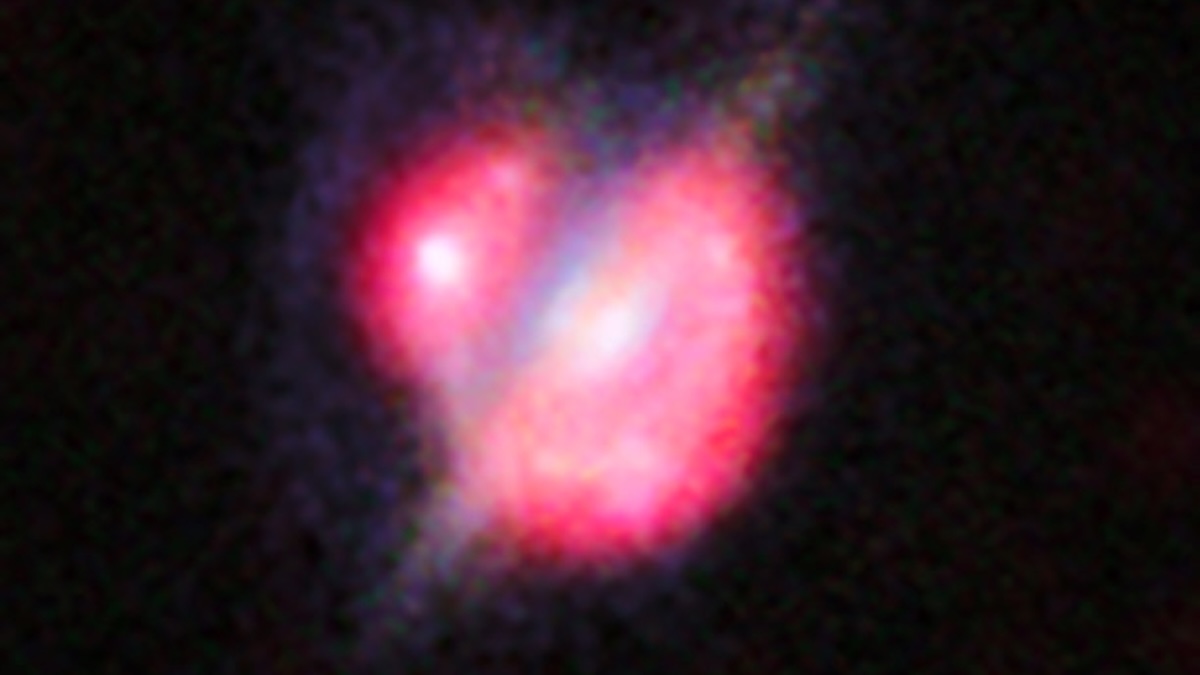
For decades, the concept of 'space lasers' has been relegated to the vibrant, often fantastical, pages of science fiction. Yet, the universe continues to prove itself stranger and more magnificent than our wildest imaginings. Recent groundbreaking observations by astrophysicists have not only confirmed the reality of these cosmic phenomena but have now identified the brightest and most distant 'space laser' ever detected – a 'gigamaser' blazing an astonishing 8 billion light-years away. This isn't just a discovery; it's a profound leap into understanding the early universe and the extreme physics that govern it.
Beyond the Sci-Fi Trope: Understanding Cosmic Masers
While the term 'space laser' conjures images of death rays from alien warships, the scientific reality, though less dramatic, is far more significant. In astrophysics, these phenomena are known as masers (Microwave Amplification by Stimulated Emission of Radiation). Just as an optical laser emits coherent light, a maser emits coherent microwaves. These natural cosmic masers are vast clouds of gas and dust where specific molecules – often water or hydroxyl – are energised and stimulated to emit microwave radiation in a concentrated beam.
Gigamasers represent the most powerful class of these celestial emitters, often found in the turbulent hearts of merging galaxies. Their immense power output and focused emission make them invaluable tools for astronomers, acting as cosmic flashlights that illuminate processes occurring billions of years in the past, in environments too distant or obscured to study by conventional means.
The Record Breaker: A Gigamaser's Luminous Call
The newly discovered gigamaser shatters previous records for both brightness and distance. Its microwave beacon has travelled an incomprehensible 8 billion light-years to reach Earth, meaning the light we are now observing was emitted when the universe was less than half its current age. This extraordinary distance provides an unprecedented opportunity to peer directly into the cosmic past, offering clues about galaxy formation and evolution during a crucial epoch.
Its unparalleled brightness suggests an incredibly energetic source, likely fueled by a colossal supermassive black hole at the core of a forming galaxy. Such a powerful maser could be driven by the shockwaves and intense radiation generated by galactic collisions, which compress gas and trigger the conditions necessary for maser emission. The sheer scale of this gigamaser challenges our models of how much energy can be channeled into these coherent beams, pushing the boundaries of astrophysical understanding.
Implications for Cosmic Understanding
The detection of this record-breaking gigamaser holds several profound implications:
- Early Galaxy Formation: By observing masers at such vast distances, astronomers can gain insights into the physical conditions, gas density, and star formation rates in the universe's infancy. This particular gigamaser might be a beacon for a nascent, rapidly forming galaxy, providing a direct glimpse into the processes that built the cosmic structures we see today.
- Black Hole Activity: The extreme power required to fuel such a maser is often linked to the accretion disks around supermassive black holes. Studying these masers can help us understand the energetic feedback mechanisms between black holes and their host galaxies, crucial for regulating galaxy growth.
- Cosmological Probes: As highly luminous and compact sources, gigamasers can act as 'standard candles' or 'standard rulers' for measuring cosmic distances, potentially refining our understanding of the universe's expansion rate and its overall geometry.
NovaPress Analysis: Peering into the Past
This discovery reaffirms the dynamic and often violent nature of the early universe. It suggests that the processes driving maser emission were robust even billions of years ago, perhaps even more so during periods of intense galactic mergers. The ability to detect such a faint signal from such a colossal distance is a testament to the advancements in radio astronomy, utilizing instruments capable of capturing these fleeting cosmic whispers.
As we continue to develop more sensitive telescopes and sophisticated analytical techniques, discoveries like this gigamaser serve as powerful reminders of how much more there is to learn. The universe is not just a collection of stars and galaxies; it is an active, evolving entity constantly surprising us with its complexity and grandeur. This 'space laser' isn't a weapon, but a valuable instrument, allowing scientists to travel back in time and illuminate the cosmic story in unprecedented detail.
— The NovaPress Editorial Team