Beyond the Flash: Unpacking the 'Fireball' Phenomenon Over WA and B.C.
By NovaPress Staff | October 26, 2023
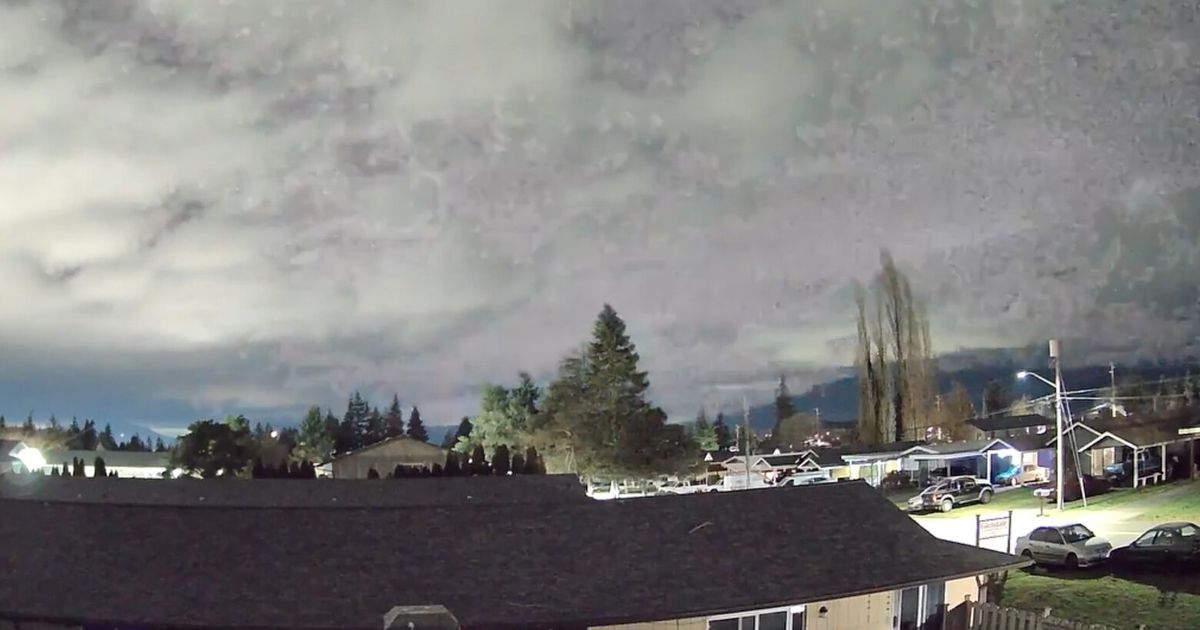
Tuesday night brought a momentary, breathtaking spectacle to the skies above Northwest Washington and British Columbia. For a fraction of a second, the darkness was pierced by a brilliant flash, observed by countless residents and captured, notably, by a security camera at Heather Argyle’s home in Mount Vernon. While the event was fleeting, its impact was widespread, sparking awe and curiosity across the Pacific Northwest. Experts have quickly weighed in, almost unequivocally identifying the phenomenon as a "fireball" – a term that, while dramatic, holds precise scientific meaning. But what exactly did the residents witness, and what can these celestial visitors tell us about our place in the cosmos?
Defining the Celestial Visitor: More Than Just a Shooting Star
Most of us are familiar with the concept of a "shooting star," the fleeting streaks of light caused by tiny dust particles burning up in Earth's atmosphere. A fireball, however, is on an entirely different scale. Scientifically, a fireball is defined as a very bright meteor, one that is brighter than the planet Venus in the night sky. These impressive displays are caused by larger pieces of space rock – often several centimeters to a meter in diameter – entering Earth's atmosphere at incredibly high speeds.
As these objects, remnants of asteroids or comets, plunge through our atmosphere, they experience immense friction. This friction rapidly heats the material to incandescence, creating the brilliant light display that captivated the Pacific Northwest. The vibrant colors often reported are due to the vaporization of various elements within the meteoroid and the ionization of atmospheric gases around it.
The Journey from Space: Origins and Impact
Where do these objects come from? The vast majority of meteors originate from the asteroid belt, a region between Mars and Jupiter teeming with rocky debris. Others can be dust or fragments shed by comets as they orbit the Sun. These fragments are constantly in motion, some eventually crossing paths with Earth's orbit. The good news is that Earth's atmosphere acts as a formidable shield; most fireballs burn up completely tens of kilometers above the surface, disintegrating into fine dust before ever reaching the ground.
In rarer cases, larger fireballs can survive their fiery descent, with fragments landing as meteorites. While the Mount Vernon event appears to have been a complete atmospheric burn-up, the sheer brightness and widespread observation underscore the size of the object that entered our atmosphere. Such events provide scientists with valuable opportunities to study the composition of extraterrestrial material, even if only through spectrographic analysis of the light produced.
A Public Awakening: The Role of Technology and Citizen Scientists
What makes events like Tuesday's fireball particularly engaging in the modern era is the omnipresence of technology. Security cameras, dash cams, and smartphones now serve as impromptu astronomical observatories. Heather Argyle's footage is a testament to this, providing crucial visual evidence that helps corroborate eyewitness accounts and allows experts to triangulate potential trajectories and estimate the object's characteristics.
Dozens of reports from across Western Washington and British Columbia poured in almost instantly, facilitated by social media and dedicated meteor tracking networks. This collective citizen science effort not only confirms the widespread nature of the sighting but also contributes to a richer dataset for researchers at institutions like NASA's Meteoroid Environment Office. Each observation, no matter how brief, adds another piece to the cosmic puzzle.
Looking Up: Our Enduring Fascination with the Cosmos
The recent fireball event serves as a potent reminder of the dynamic and often spectacular universe beyond our planet. While we often focus on space missions and distant galaxies, our immediate celestial neighborhood is equally active, constantly interacting with Earth.
These natural light shows spark wonder, curiosity, and a renewed interest in astronomy for many. They underscore the sheer majesty of the cosmos and our planet's ongoing journey through it. As long as there's space, there will be cosmic debris, and occasionally, Earth will cross paths with a piece large enough to put on a breathtaking, fiery display. The Pacific Northwest was fortunate enough to witness one such moment, a fleeting glimpse into the vastness that surrounds us, reminding us to always look up.