Beyond the Abstract: How Applied Category Theory Could Be the Next Frontier for 'Green' Innovation
By The NovaPress Editorial Team | March 15, 2024
In a world grappling with complex crises – from climate change to global pandemics – the search for solutions often leads us down familiar paths: technological breakthroughs, policy reforms, and social shifts. But what if one of the most powerful, yet esoteric, tools for understanding complexity comes from a surprising corner of mathematics: applied category theory?
This profound question was recently explored by Natalie Wolchover in Quanta Magazine, shining a light on whether this deeply abstract field could indeed become what she provocatively calls 'green' math. At NovaPress, we delve into this intriguing concept, exploring how the language of relationships could unlock a new era of sustainable and intelligent problem-solving.
The Esoteric Power of Category Theory
Category theory, in its purest form, is a branch of mathematics that studies mathematical structures and the relationships between them. Unlike traditional mathematics that focuses on the 'objects' themselves (numbers, sets, functions), category theory focuses on the 'arrows' or mappings that connect these objects. It's a meta-mathematics, a framework for frameworks, known for its incredible generality and abstract nature.
For decades, its applications were largely confined to theoretical computer science and highly abstract mathematics. The idea that it could help solve real-world problems like resource allocation or epidemic prediction seemed, to many, counter-intuitive. However, the rise of applied category theory is challenging this notion, proposing that its abstract lens is precisely what's needed to model the intricate, interconnected systems that define our modern world.
From Outbreaks to Optimization: A 'Green' Framework
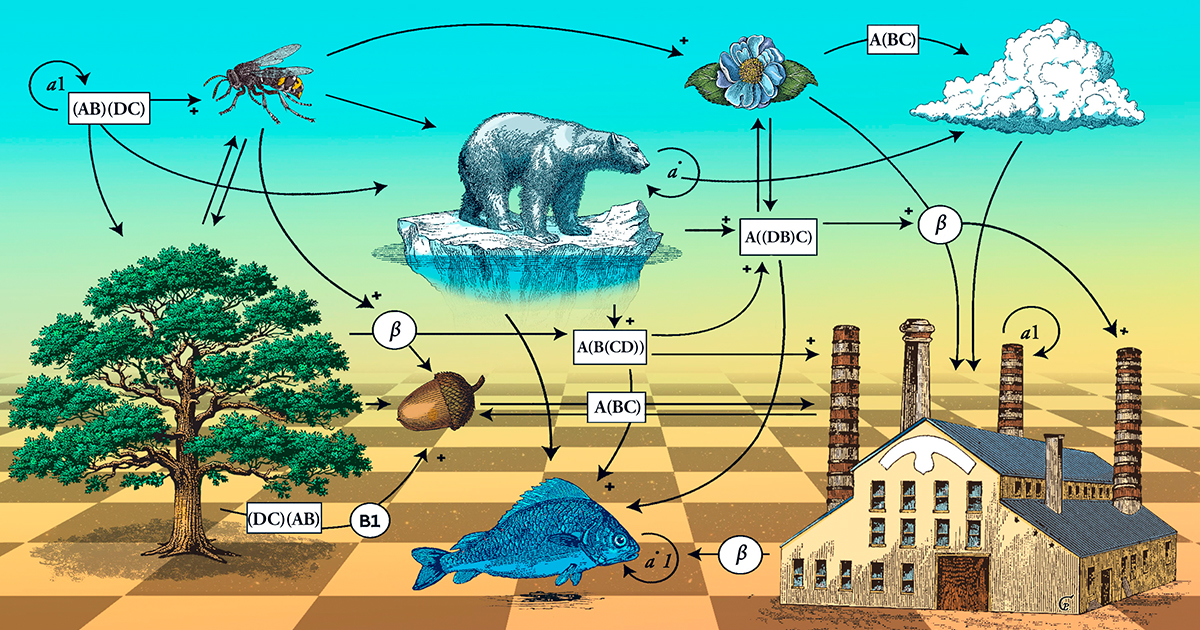
One compelling example of category theory's practical power emerges in epidemiology. To forecast disease progression, epidemiologists frequently employ stock-and-flow diagrams. These illustrations map out 'stocks' of individuals (e.g., susceptible, infected, recovered, deceased) and 'flows' representing transitions between these states. They are powerful tools, but their ad-hoc nature can limit their adaptability and integration with other models.
Here's where category theory steps in. It provides a universal mathematical language to describe these diagrams, abstracting away the specifics to focus on the underlying structure of relationships and transitions. By formalizing these models within a categorical framework, scientists can achieve several profound advantages:
- Enhanced Robustness: Categorical models are less prone to logical inconsistencies, ensuring the integrity of complex simulations.
- Modularity and Compositionality: Different models (e.g., an epidemiological model and an economic model) can be seamlessly composed and integrated, creating more holistic and powerful predictive tools.
- Generalization: The same categorical principles used for epidemics can be applied to other flow-based systems, such as supply chains, energy grids, or even ecological nutrient cycles.
This ability to build, connect, and analyze complex systems with unprecedented rigor and flexibility is what earns applied category theory the moniker of 'green' math. It promises a way to model our planet's intricate systems – from atmospheric carbon cycles to global trade networks – with a precision that could lead to truly optimized and sustainable solutions. Imagine designing urban infrastructure that minimizes waste by understanding material flows categorically, or developing energy grids that dynamically balance supply and demand with categorical logic.
Future Implications: A New Lens on Sustainability
The implications extend far beyond isolated problems. As societies strive for sustainability, the ability to model complex interdependencies – between economic activity, environmental impact, and social welfare – becomes paramount. Applied category theory offers a potent toolkit for achieving this.
It could revolutionize fields like systems engineering, resource management, and even artificial intelligence, where understanding relationships between data structures is crucial. By embracing this abstract mathematical discipline, we might find ourselves equipped with the intellectual infrastructure to design truly regenerative systems, anticipate crises with greater accuracy, and manage our shared planetary resources with unparalleled efficiency.
The journey from abstract theory to tangible impact is often long, but the emergence of applied category theory as a potential 'green' math signifies a thrilling new frontier. It reminds us that innovation can come from the most unexpected places, proving that even the most abstract thought can be profoundly practical when applied with vision and purpose.