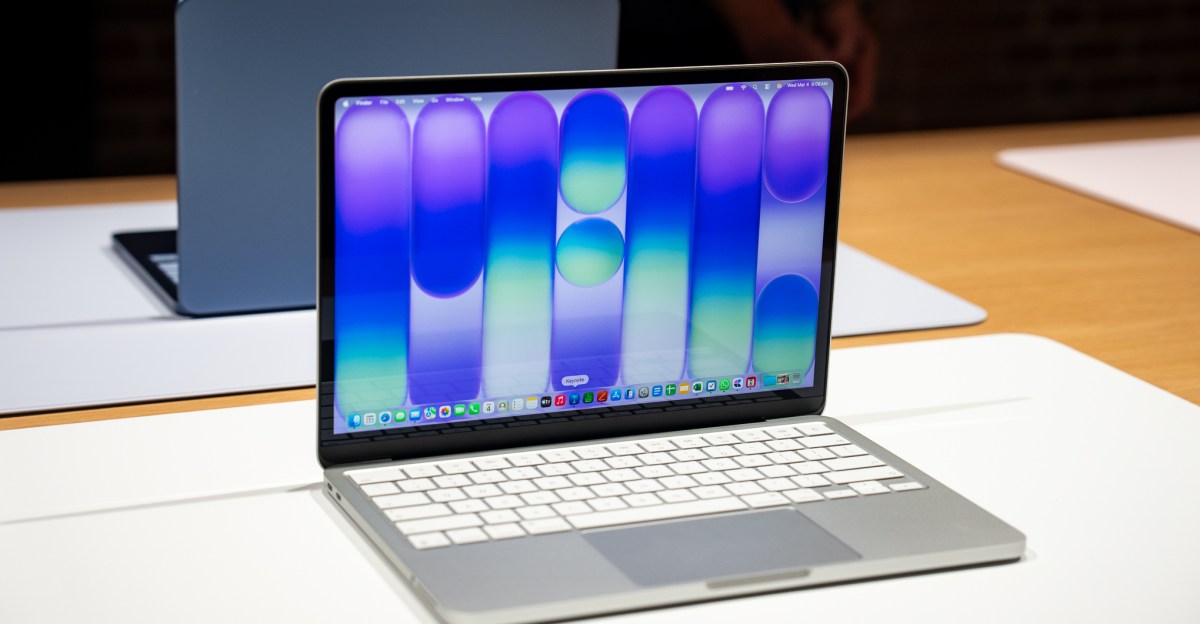
MacBook Neo vs. M2 MacBook Air: Unpacking Apple's Dual-Track Strategy
In the ever-evolving landscape of personal computing, Apple's product releases consistently spark debate and re-evaluation. The latest buzz centers around a perceived face-off: the mysterious "MacBook Neo" against the established excellence of an M2 (or later) MacBook Air. Conventional wisdom might dictate a direct competition, yet a closer look reveals a far more nuanced and strategically intricate narrative. The Verge rightly points out that an M2 MacBook Air, especially a refurbished model, often presents a "better deal" and is arguably a "better computer." However, the crucial differentiator lies in the declaration that the "Neo isn’t trying to replace the Air." This statement isn't just a marketing quip; it's a window into Apple's sophisticated approach to market segmentation and future innovation.
The Enduring Value of the M2 MacBook Air
The M2 MacBook Air, and its subsequent iterations, stands as a testament to Apple's mastery of the mainstream laptop market. Powered by Apple Silicon, these machines deliver an unparalleled blend of performance, battery life, and a fanless design, all wrapped in a sleek, portable form factor. For the vast majority of users – students, creative professionals, office workers, and everyday consumers – the M2 Air is a formidable workhorse. Its robust ecosystem, reliable software updates, and seamless integration with other Apple devices make it an incredibly compelling package.
- Performance & Efficiency: The M2 chip provides ample power for demanding tasks while maintaining exceptional energy efficiency.
- Portability & Design: Its thin, lightweight chassis and iconic design remain highly desirable.
- Value Proposition: Especially in the refurbished market, an M2 Air offers flagship-level performance at a more accessible price point, making it an undeniable "better deal" for many.
The current market conditions, with potentially new models on the horizon, make finding an M2 or later MacBook Air an opportune moment. Its proven track record and widespread availability solidify its position as a default recommendation for anyone seeking a premium, reliable laptop.
Introducing the MacBook Neo: A Glimpse into Apple's Future?
If the MacBook Air caters to the present, the "MacBook Neo" appears to be a harbinger of Apple's future ambitions. While details remain speculative, the very assertion that it "isn’t trying to replace the Air" suggests a product designed for a distinct purpose, targeting a different demographic or use-case entirely. The "good luck" mentioned in the original title could allude to its potentially niche market, experimental features, higher price point, or even limited availability.
- Niche Specialization: The Neo might incorporate cutting-edge technologies, perhaps focusing on extreme portability, unique input methods, or specialized processing capabilities for emerging fields like AI/VR development.
- Experimental Features: It could serve as a testbed for new form factors, display technologies, or advanced sensor arrays not yet ready for mass-market adoption.
- Premium Segment: Positioned above the Air, the Neo might target ultra-premium users or professionals with very specific, demanding workflows that justify a higher investment.
The "Neo" likely represents Apple's exploration of new computing paradigms, pushing the boundaries of what a laptop can be, rather than merely refining an existing formula. It's not about making a "better" Air, but about creating something *different*.
Apple's Deliberate Dual-Track Strategy
The coexistence of the M2 MacBook Air and the rumored MacBook Neo illustrates a shrewd and deliberate dual-track product strategy. Apple is not creating internal competition but rather diversifying its portfolio to capture a wider spectrum of user needs and market opportunities:
- Mainstream Excellence: The MacBook Air continues to dominate the everyday productivity and creative market, offering proven performance and value.
- Pioneering Innovation: The MacBook Neo, by contrast, ventures into uncharted territory, catering to early adopters, innovators, and specialized professionals who prioritize cutting-edge features over conventional value.
This approach allows Apple to maintain its stronghold in established markets while simultaneously cultivating new ones. It minimizes the risk associated with radical new products by not forcing them into direct competition with highly successful, mature lines. For consumers, this means more choices, but also a more complex decision-making process that requires understanding individual needs rather than just comparing spec sheets.
Future Implications for the Apple Ecosystem
The emergence of devices like the MacBook Neo signals a future where Apple’s computing offerings become even more specialized. We might see:
- Increased Segmentation: A clearer divide between consumer-grade devices (Air), prosumer/professional workhorses (Pro), and highly specialized, innovative platforms (Neo).
- Accelerated Innovation: The Neo could pave the way for technologies that eventually trickle down to the Air and Pro lines, much like features from the iPhone Pro eventually make their way to the standard models.
- Redefined "Laptop": As computing needs evolve, the traditional laptop form factor might diversify, with devices like the Neo exploring new interactions and functionalities beyond the clamshell design.
Conclusion: Choose Your Path Wisely
The "MacBook Neo versus an old MacBook Air" isn't a simple battle of superior specs. It's a strategic bifurcation by Apple, addressing different market segments with tailored solutions. The M2 MacBook Air remains an exceptional choice for those seeking proven performance, reliability, and value in a conventional computing experience. For those intrigued by the bleeding edge, specialized use cases, or a glimpse into the future of personal computing, the MacBook Neo beckons, promising innovation over broad appeal. The "good luck" isn't about difficulty in choosing the "better" machine, but rather the challenge of aligning your unique needs with Apple's increasingly diverse and visionary product landscape.